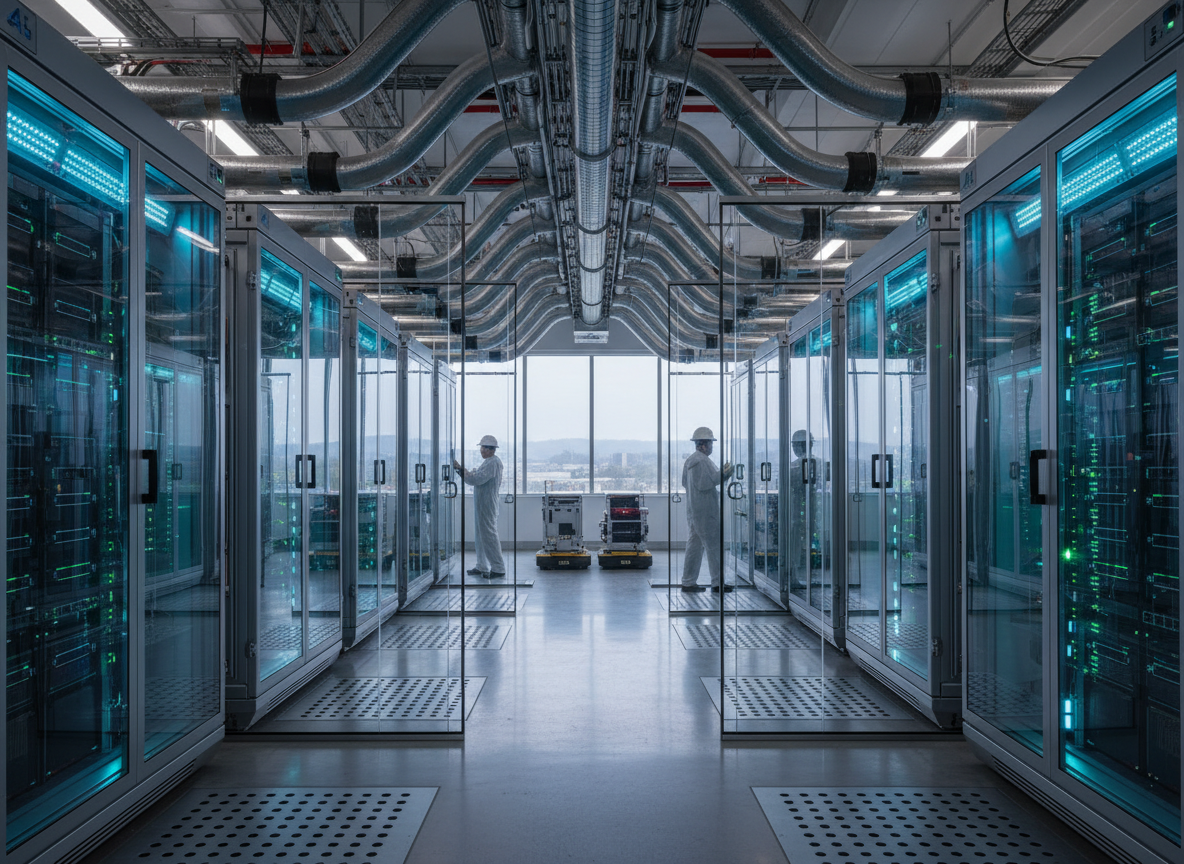
AI and high-performance computing workloads have introduced infrastructure requirements that differ meaningfully from conventional enterprise compute environments. Rack densities in AI-focused deployments can significantly exceed traditional data hall assumptions, and the pace at which GPU and accelerator hardware evolves means infrastructure often needs to accommodate equipment specifications that are still being finalized late in a project's timeline. Modular delivery allows selected building and infrastructure components to be configured and fabricated in parallel with these ongoing engineering decisions, rather than waiting for every specification to be locked before construction begins.
Configurations for AI and HPC applications typically involve closer coordination between structural, electrical, and cooling systems than a standard modular building. Structural design coordination for higher-density physical layouts must account for higher equipment loads and, in some cases, denser rack layouts than the building envelope was originally sized for. Electrical infrastructure coordination for higher per-rack power distribution is planned around higher per-rack power draw and the distribution architecture needed to support it. Cooling infrastructure is where AI and HPC deployments diverge most from conventional approaches, since many high-density configurations move toward liquid cooling or hybrid air/liquid strategies rather than air cooling alone.
Because AI and HPC infrastructure programs frequently phase in additional capacity as compute requirements grow, modular configurations are often planned with future expansion in mind from the outset: consistent structural and electrical interfaces, coordinated physical layouts, and configuration standards that make it practical to add capacity in later phases without redesigning the approach each time.
Data Center Modular manufactures AI and HPC modular infrastructure based on the specifications provided by the buyer's engineering team, and delivers it internationally. We do not perform IT equipment selection, rack-level engineering, or on-site installation and commissioning of compute hardware — those remain the responsibility of the buyer and their technical integration partners.
Technician insight
One of the more common coordination challenges in AI and HPC infrastructure projects is that cooling and power specifications are sometimes still evolving after structural and electrical configuration work has begun, since compute hardware selection can change late in a project. Building in interface flexibility and confirming which specifications are firm versus preliminary early in the process helps avoid rework later in fabrication.
AI and HPC Modular Infrastructure Services We Offer
✓High-Density Compute Modules
Modular building configurations sized and structured for elevated rack densities beyond conventional data hall assumptions.
✓Liquid-Cooling-Ready Electrical Buildings
Electrical infrastructure modules configured with distribution architecture suited to higher power draw per rack.
✓Hybrid Cooling Interface Modules
Infrastructure configured to interface with combined air and liquid cooling strategies specified by the buyer's engineering team.
✓Phased AI Capacity Modules
Modular units configured with consistent interfaces to support planned future capacity additions as compute requirements grow.
✓GPU Cluster Support Infrastructure
Supporting electrical and mechanical infrastructure configured around the operational requirements of GPU and accelerator clusters.
✓AI Infrastructure Expansion Modules
Modules designed to integrate with existing AI/HPC infrastructure programs as facilities scale.
How it works
- 1
Project Requirement Review
We review the compute density, power, and cooling requirements provided by your engineering team, along with site destination and environmental conditions.
- 2
Configuration to Specification
The modular infrastructure is configured around your specified rack densities, power distribution requirements, and cooling strategy.
- 3
Factory Manufacturing
We manufacture the modular components according to the agreed technical specifications.
- 4
Quality Control and Testing
Manufactured modules undergo quality control and testing against the confirmed specifications before shipment.
- 5
International Delivery
Modules are delivered internationally, concluding our involvement prior to on-site installation and IT integration.