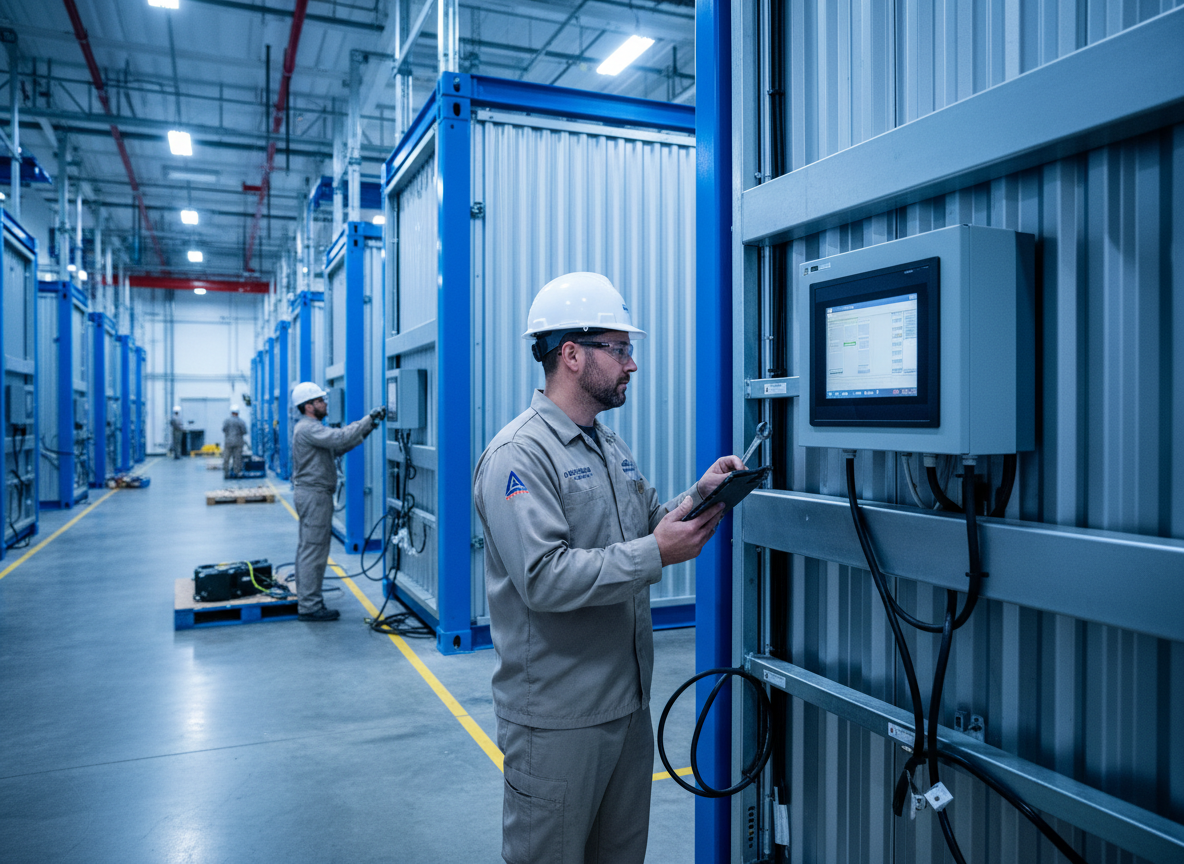
Modular Data Halls from Data Center Modular represent a strategic shift in data center development, enabling project teams to deploy critical infrastructure with enhanced speed and predictability. These pre-engineered and factory-integrated modules are designed to house IT equipment, power distribution, cooling systems, and fire suppression within a self-contained, robust structure. Our approach minimizes on-site construction complexities, reduces project timelines, and allows for precise cost control by leveraging standardized manufacturing processes. We focus on delivering a high-quality, repeatable product that meets stringent performance requirements, providing a foundation for reliable data center operations.
Typical configurations for our Modular Data Halls range from single-module solutions for edge deployments or capacity expansion to multi-module arrays forming large-scale data center facilities. Each module is customizable in terms of internal layout, rack density, power density per rack, and cooling architecture, including options for direct-to-chip liquid cooling integration, hot/cold aisle containment, and various CRAC/CRAH unit placements. Structural designs accommodate diverse environmental conditions and seismic requirements, ensuring durability and operational integrity. Integration considerations include mechanical and electrical interfaces for seamless connection to site-specific utilities, as well as provisions for network cabling pathways and building management system (BMS) integration points.
The procurement and deployment of Modular Data Halls involve careful planning to optimize project outcomes. Key considerations include defining precise power and cooling requirements per module, specifying desired security features, and planning for logistics and site preparation. Our process emphasizes detailed design reviews and factory acceptance testing (FAT) to ensure all specified parameters are met prior to shipment. This rigorous quality assurance process helps mitigate risks associated with on-site integration and commissioning, providing project teams with a high degree of confidence in the delivered solution. Understanding the full scope of integration – from structural anchoring to utility connections – is crucial for a successful deployment.
Considerations for Evaluating Modular Data Halls
When evaluating Modular Data Halls, project teams often consider factors such as scalability, speed of deployment, and total cost of ownership. The ability to incrementally add capacity as demand grows, rather than overbuilding upfront, offers significant financial advantages. The accelerated deployment schedule inherent in modular construction can bring new capacity online months faster than traditional build methods, impacting time-to-revenue. Furthermore, the controlled factory environment leads to consistent quality and reduced on-site labor requirements, minimizing potential delays and cost overruns. These benefits collectively contribute to a compelling value proposition for data center developers and operators seeking efficient, adaptable infrastructure solutions.
Technician insight
In Ashburn, the thing that catches most people out with Modular Data Halls isn't the module itself, but the often-overlooked soil conditions. The area's high clay content and variable water table mean that what looks like a simple foundation can quickly become a complex, expensive civil engineering challenge if not thoroughly investigated early in the planning process.
Modular Data Halls Services We Offer
✓Edge Data Center Modules
Compact, self-contained modules optimized for rapid deployment at network edge locations, supporting low-latency applications and distributed computing needs.
✓High-Density Compute Modules
Designed for demanding workloads, these modules feature enhanced cooling capabilities and power distribution to support high-density rack configurations and advanced processors.
✓Colocation Ready Modules
Configured for multi-tenant environments, offering flexible power and cooling zones, robust security features, and scalable rack space for colocation providers.
✓Hyperscale Expansion Units
Large-format modular units engineered for seamless integration into existing hyperscale data center campuses, providing rapid capacity augmentation.
✓Liquid-Cooled Modules
Specialized modules incorporating direct-to-chip or immersion cooling systems for ultra-high-density compute, optimizing energy efficiency and performance.
✓Disaster Recovery Modules
Pre-configured, rapidly deployable modules designed to provide immediate, temporary or permanent data center capacity in response to unforeseen events.
✓Secure Compartmented Modules
Modules with enhanced physical security features, including hardened exteriors, advanced access control, and specialized surveillance for sensitive data requirements.
How it works
- 1
Initial Consultation & Requirements Definition
We begin with a detailed discussion to understand your project's specific power, cooling, space, and environmental requirements. This phase defines the scope, desired capacity, and any unique operational considerations for your Modular Data Hall.
- 2
Conceptual Design & Specification
Based on the defined requirements, our team develops a conceptual design, outlining the module's layout, key components, and technical specifications. We provide detailed documentation for review and iteration, ensuring alignment with your project goals.
- 3
Detailed Engineering & Manufacturing Planning
Upon design approval, comprehensive engineering drawings are produced, detailing every aspect of the module's construction, electrical, mechanical, and IT infrastructure. This phase leads into manufacturing planning and procurement of long-lead items.
- 4
Factory Integration & Quality Assurance
The Modular Data Hall is constructed and integrated in a controlled factory environment. Rigorous quality assurance checks and factory acceptance testing (FAT) are performed to verify all systems and components meet specified performance and reliability standards.
- 5
Logistics & Shipment Preparation
Once FAT is complete and the module passes all inspections, it is prepared for shipment. This includes securing internal components, weatherproofing, and coordinating specialized transport logistics to ensure safe and timely delivery to your project site.
Pricing
The cost of a Modular Data Hall is influenced by several critical factors, including its overall dimensions and structural design requirements to meet local building codes and environmental conditions. The specific integration of IT equipment, power distribution units, and cooling infrastructure significantly impacts the final price. Electrical capacity and cooling methodology (e.g., air-cooled, liquid-cooled, direct-to-chip) are major drivers. Interior finishes, security features, and the quantity of modules ordered also play a role. Furthermore, the destination of the module, associated logistics, and the required production schedule can affect pricing.