2026-09-16 ·
Modular Infrastructure for AI and HPC Deployments
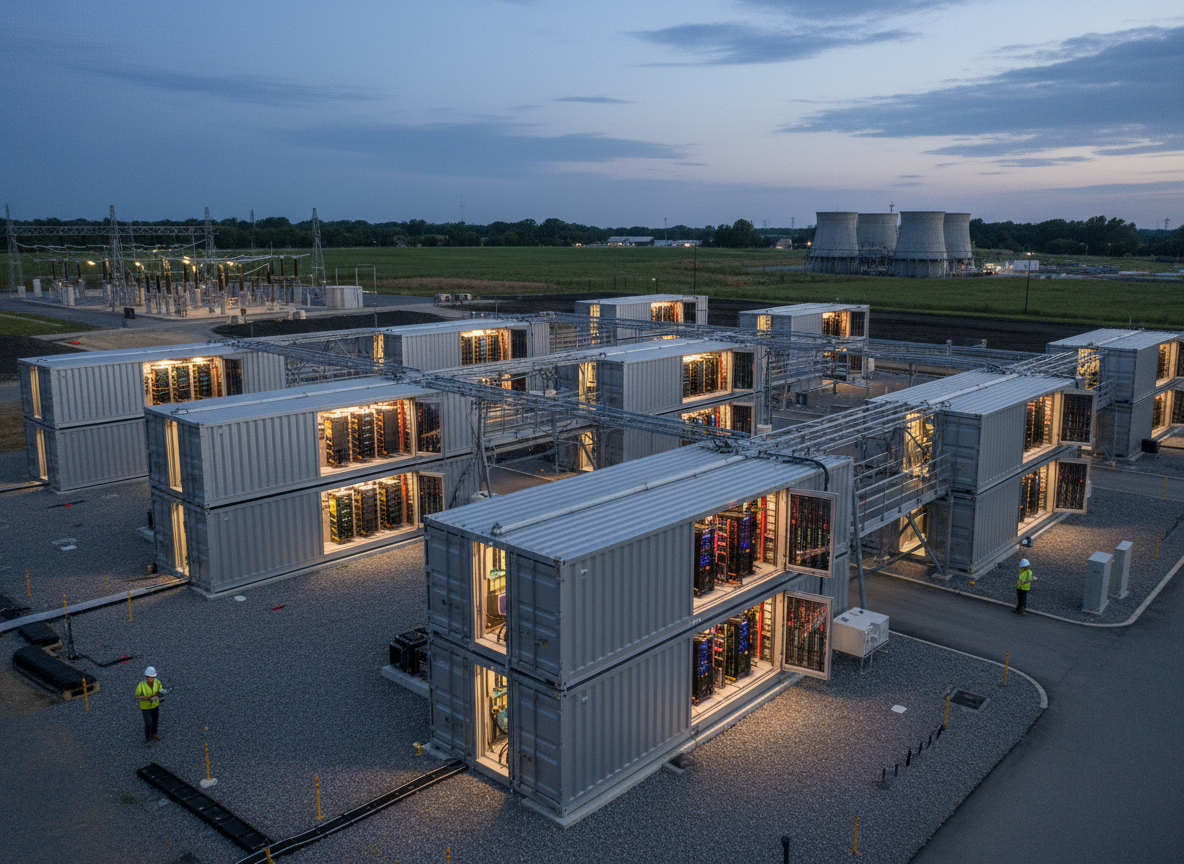
Modular data center infrastructure offers a compelling solution for the demanding requirements of AI and High-Performance Computing (HPC) deployments, enabling faster time-to-market, enhanced scalability, and optimized operational efficiency compared to traditional build methods. These deployments typically demand power densities ranging from 30 kW to over 100 kW per rack, often requiring specialized cooling solutions like direct-to-chip liquid cooling or advanced rear-door heat exchangers. Modular approaches address these challenges by providing pre-engineered, factory-built components that integrate power, cooling, and IT space, significantly reducing onsite construction timelines and mitigating risks associated with complex, high-density installations. This allows for rapid scaling from initial pilot projects to multi-megawatt facilities, crucial for the iterative development cycles inherent in AI and HPC research and commercialization.
The Unique Demands of AI and HPC Workloads
AI and HPC workloads are characterized by their intensive computational requirements, leading to exceptionally high power consumption and heat generation. Unlike general-purpose data centers, these environments frequently utilize Graphics Processing Units (GPUs) and specialized accelerators that can draw several kilowatts per unit. This translates into rack densities that often exceed 50 kW, pushing the limits of conventional air-cooling systems. Furthermore, the interconnected nature of these compute clusters necessitates ultra-low latency networking, demanding precise cabling and network infrastructure integration within the modular units. The need for rapid deployment to capture market opportunities or accelerate research timelines further stresses traditional construction models, making modular solutions particularly attractive for these high-stakes applications. The ability to deploy in phases, adding capacity as needed, is a significant advantage.
Scalability and Speed of Deployment
One of the primary benefits of modular infrastructure for AI and HPC is its inherent scalability and speed of deployment. Traditional data center construction can take 18–24 months or more for a substantial facility, a timeline incompatible with the fast-evolving landscape of AI and HPC. Modular solutions, such as <a href="/services/modular-data-center-buildings">modular data center buildings</a> or <a href="/services/data-center-expansion-modules">data center expansion modules</a>, are manufactured off-site in controlled environments. This parallel construction process means that site preparation can occur concurrently with module fabrication, drastically cutting down overall project timelines to as little as 6–9 months for significant capacity. This rapid deployment capability allows organizations to quickly provision the necessary compute resources to meet immediate demands, whether for a new research initiative in Singapore or an expanding commercial AI platform in Dublin, without being constrained by lengthy construction schedules.
Advanced Cooling Solutions for High Density
The extreme heat generated by AI and HPC hardware necessitates advanced and often specialized cooling strategies that go beyond typical CRAC/CRAH units. Modular designs are particularly adept at integrating these sophisticated cooling systems. Options include direct liquid cooling (DLC), where coolant is delivered directly to the chip or server, and immersion cooling, where servers are submerged in dielectric fluid. Modular units can be pre-fitted with the necessary liquid distribution units (LDUs), heat exchangers, and associated plumbing, ensuring optimal performance and efficiency from day one. For example, <a href="/services/cooling-and-mechanical-modules">cooling and mechanical modules</a> can be designed specifically to house chillers, pumps, and heat rejection equipment tailored for high-density liquid-cooled environments, providing a complete, integrated solution. This pre-integration minimizes on-site complexity and ensures proper system balance.
Power Delivery and Distribution Challenges
Delivering reliable and efficient power to high-density AI and HPC racks presents significant challenges. These deployments often require higher voltage distribution (e.g., 400V/415V) to minimize current and associated losses, along with robust uninterruptible power supply (UPS) systems and redundant power paths. Modular electrical buildings, such as <a href="/services/modular-electrical-buildings">modular electrical buildings</a> or <a href="/services/power-distribution-modules">power distribution modules</a>, are specifically engineered to house and distribute the substantial power required. They can incorporate high-capacity switchgear, transformers, and UPS systems, all pre-tested and integrated before arriving at the site. This pre-fabrication reduces installation time, enhances safety, and ensures that the power infrastructure is capable of supporting the fluctuating and intense power demands of AI and HPC workloads, whether deployed in a remote research facility in Johannesburg or a bustling tech hub in Silicon Valley.
Optimizing Footprint and Location Flexibility
AI and HPC deployments often require strategic placement to minimize latency to end-users or data sources, or to leverage specific environmental conditions. Modular infrastructure offers unparalleled flexibility in terms of location and footprint optimization. Instead of requiring a large, purpose-built facility, modular units can be deployed in various settings, from existing industrial sites in Phoenix to remote research outposts in Santiago. This is particularly relevant for <a href="/services/edge-data-centers">edge data centers</a> supporting AI inference at the network periphery. The compact, self-contained nature of modular units allows for efficient use of land, reducing real estate costs and enabling deployment in locations where traditional construction would be impractical or prohibitively expensive. This flexibility extends to multi-building data center infrastructure, where multiple modules can be combined to create larger, scalable campuses.