2026-09-16 ·
Modular vs. Conventional Data Center Construction
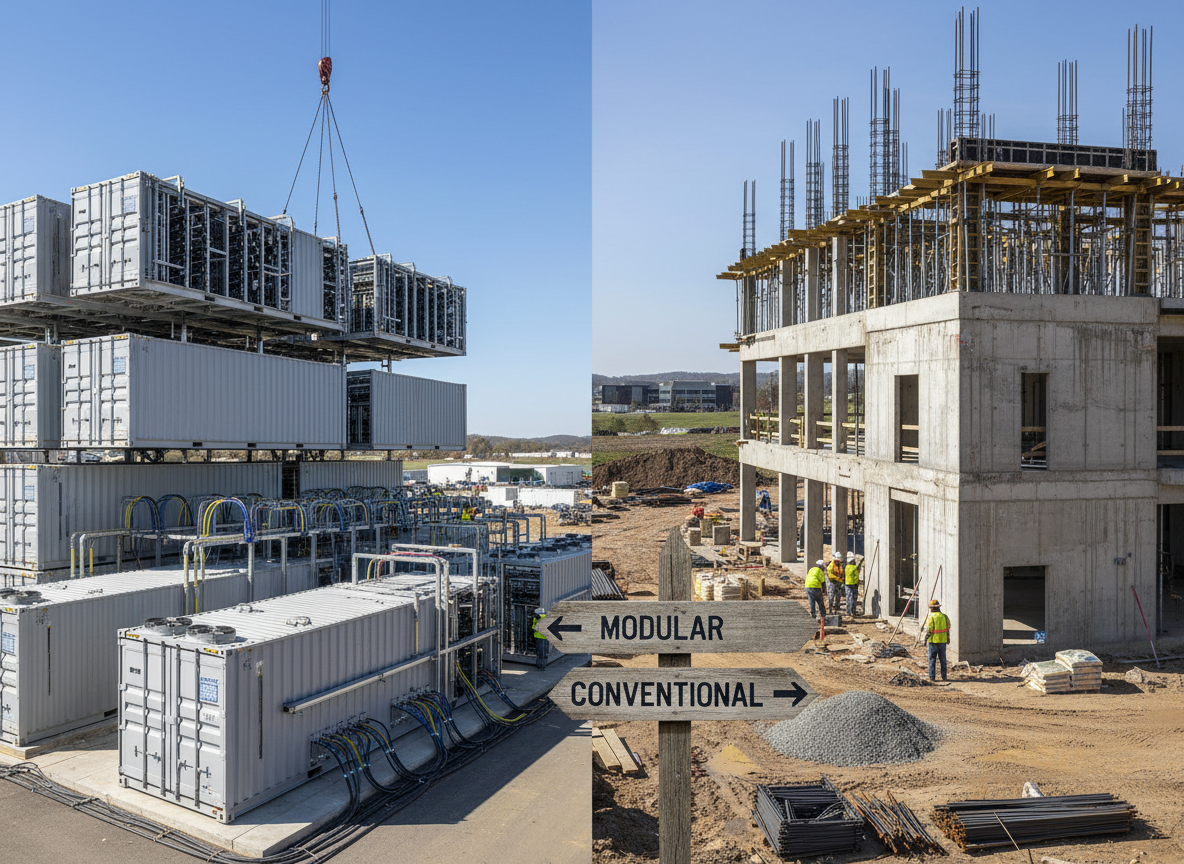
Modular data center construction generally offers a significantly faster deployment timeline, often reducing project schedules by 30% to 50% compared to traditional stick-built methods, primarily due to concurrent off-site manufacturing and on-site preparation. While conventional construction provides greater customization potential for highly unique architectural designs or extremely large, single-phase builds, modular approaches excel in scalability, allowing for incremental expansion and reduced initial capital expenditure. The choice between these two methodologies hinges on project-specific requirements for speed, flexibility, site constraints, and long-term expansion strategies.
Core Differences in Construction Methodology
The fundamental distinction lies in the build location and process. Conventional data center construction involves constructing the facility entirely on-site, from foundational work and structural framing to the installation of all internal systems like power, cooling, and networking. This sequential process means that each phase must largely be completed before the next can begin, leading to extended project durations. It relies heavily on local labor and materials, which can introduce variability in quality and scheduling based on regional availability and expertise. The design is often highly bespoke, tailored to specific site geometries and aesthetic preferences, making it less amenable to standardized replication.
In contrast, modular data center construction involves manufacturing pre-engineered, self-contained modules in a controlled factory environment. These modules, which can range from individual power distribution units to entire data halls, are then transported to the site and assembled. This parallel processing — where site preparation (foundations, utility connections) occurs simultaneously with module fabrication — is the primary driver of accelerated delivery. Quality control is often enhanced in a factory setting, and standardization can lead to more predictable performance and easier maintenance. For example, a modular data hall can be fabricated with all racks, cooling, and power infrastructure pre-installed and tested before shipment.
Speed of Deployment and Project Timelines
One of the most compelling arguments for modular construction is its expedited deployment. Conventional data centers can take 18–36 months from design to commissioning, depending on size and complexity. This includes extensive time for permitting, procurement, and sequential on-site construction activities. Delays due to weather, labor shortages, or material availability are common and can significantly impact the schedule and budget.
Modular solutions, however, can often be deployed within 6–12 months, and sometimes even faster for smaller, pre-configured units. This rapid deployment is critical for businesses needing to quickly respond to market demand or expand capacity. For instance, in rapidly growing markets like Singapore or Dublin, where land is at a premium and speed to market is paramount, the ability to deploy an integrated modular data center in a fraction of the time offers a distinct competitive advantage. This efficiency stems from the parallel workflows and the ability to conduct factory acceptance testing (FAT) before modules even arrive on site, reducing on-site commissioning time.
Scalability and Expansion Capabilities
Scalability is another key differentiator. Conventional data centers are typically built to a large, fixed capacity from the outset, requiring substantial upfront capital investment. Expanding a conventional facility often involves significant disruption to existing operations, lengthy construction periods, and complex integration challenges with the live environment. This 'build big now' approach can lead to stranded capacity if demand doesn't materialize as quickly as projected.
Modular designs inherently support a 'grow-as-you-go' strategy. Data center operators can deploy initial capacity and then add additional modules – such as data center expansion modules or specialized cooling units – as demand dictates. This allows for more precise alignment of capital expenditure with actual IT load growth, optimizing financial outlays and minimizing the risk of overbuilding. This incremental approach is particularly beneficial for edge deployments or facilities in dynamic markets like Sao Paulo or Tokyo, where future demand can be difficult to predict precisely.
Capital Expenditure and Operational Efficiency
While the per-square-foot cost of a modular unit might sometimes appear higher initially, the overall Total Cost of Ownership (TCO) can be lower due to several factors. Reduced construction time translates directly into lower labor costs and earlier revenue generation. The ability to scale incrementally avoids the upfront capital outlay for unused capacity, freeing up funds for other investments. Furthermore, the standardized and optimized designs of modular systems often lead to improved energy efficiency. For example, pre-engineered cooling and mechanical modules can be designed for optimal PUE (Power Usage Effectiveness) from day one.