2026-09-16 ·
When Modularization Makes Sense for Data Center Projects
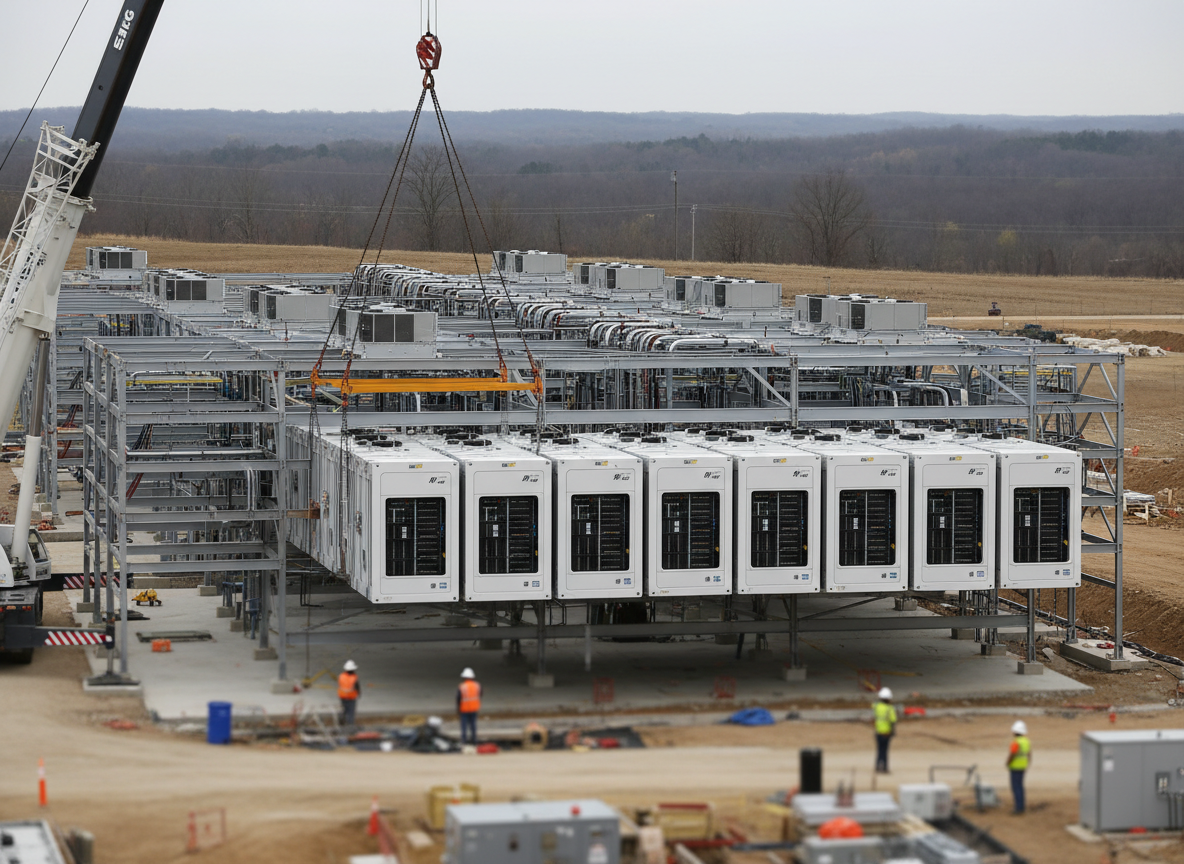
Modularization makes sense for data center projects primarily when rapid deployment, scalability, and predictable quality are paramount, often reducing overall project timelines by 30% to 50% compared to traditional stick-built construction methods. This approach is particularly advantageous in scenarios demanding stringent control over manufacturing environments, such as those in regions with fluctuating labor availability or challenging site conditions. By shifting a significant portion of construction from the field to a controlled factory setting, modular solutions mitigate many common project risks, including weather delays, supply chain inconsistencies for specific components, and on-site construction complexities. This strategy enables data center owners and operators to bring capacity online faster, aligning with aggressive market demands and digital transformation initiatives. Furthermore, the inherent repeatability of modular designs facilitates standardization, which can lead to more efficient maintenance and operations over the lifecycle of the facility.
Rapid Deployment and Time-to-Market Pressures
One of the most compelling drivers for adopting modular data center solutions is the urgent need for rapid deployment. In today's digital economy, time-to-market can be a critical differentiator, directly impacting competitive advantage and revenue generation. Traditional data center construction, with its sequential on-site processes, often faces prolonged schedules due to weather dependency, labor shortages, and complex logistical coordination. Modular construction, conversely, allows for parallel processes: site preparation can occur concurrently with the fabrication of modules in a factory setting. This parallelization significantly compresses project timelines, enabling facilities to become operational in months rather than years. For example, a hyperscale data center requiring phased expansion in a market like Singapore or Dublin might leverage modular data halls to quickly add capacity as demand dictates, avoiding lengthy permitting and construction delays associated with traditional builds. The ability to deploy quickly is not just about speed; it's about responsiveness to market shifts and capitalizing on immediate opportunities.
Scalability and Phased Expansion Strategies
Modular data centers inherently support highly granular scalability, making them ideal for projects where future demand is uncertain or where a phased investment strategy is preferred. Rather than overbuilding initial capacity, which ties up capital and incurs higher operational costs for underutilized space, modular solutions allow for precise, incremental expansion. This flexibility is crucial for edge computing deployments, where initial demand might be small but rapid growth is anticipated, or for enterprises expanding their own data center footprint. For instance, an organization might deploy an initial set of <a href="/services/edge-data-centers">Edge Data Centers</a> to serve a specific regional need, then add additional modules as user traffic or data processing requirements increase. Each module can be designed and manufactured to exact specifications, ensuring seamless integration with existing infrastructure and maintaining consistent performance standards across the entire facility. This approach minimizes upfront capital expenditure and optimizes resource allocation over the data center's lifecycle.
Quality Control and Manufacturing Consistency
The manufacturing of data center modules in a controlled factory environment offers significant advantages in terms of quality control and consistency. Unlike on-site construction, which is subject to varying environmental conditions and labor skill sets, factory fabrication adheres to strict quality assurance protocols and standardized processes. This controlled environment minimizes errors, reduces rework, and ensures that each component meets precise engineering specifications. For complex infrastructure like <a href="/services/power-distribution-modules">Power Distribution Modules</a> or <a href="/services/cooling-and-mechanical-modules">Cooling and Mechanical Modules</a>, this level of precision is critical for reliability and operational efficiency. The ability to perform extensive factory acceptance testing (FAT) before modules are shipped to the site means that potential issues are identified and resolved pre-deployment, significantly reducing commissioning time and risk once on-site. This consistency is invaluable for mission-critical facilities where downtime is unacceptable, providing a predictable performance baseline across all deployed units.
Site Constraints and Remote Deployments
Modular data centers are particularly well-suited for projects facing significant site constraints, challenging environmental conditions, or remote locations where traditional construction is impractical or cost-prohibitive. This includes urban environments with limited space, regions with extreme climates, or areas lacking skilled construction labor. For example, deploying data center capacity in a remote mining operation in Western Australia or an offshore oil rig would be virtually impossible with traditional methods, but modular units can be transported and assembled with minimal on-site work. Similarly, in densely populated cities like Tokyo or London, where land is scarce and construction logistics are complex, modular <a href="/services/modular-data-center-buildings">Modular Data Center Buildings</a> can be vertically stacked or integrated into existing structures with far greater ease. The self-contained nature of modules also reduces the environmental footprint of on-site construction, minimizing disruption to surrounding areas and local ecosystems.
Cost Predictability and Risk Mitigation
While the initial unit cost of a modular component might sometimes appear higher than its stick-built equivalent, modularization often leads to greater cost predictability and overall project savings by mitigating common risks. The factory-based production model provides transparent pricing for materials and labor, reducing the likelihood of cost overruns due to unforeseen on-site complications, weather delays, or fluctuating material prices. Furthermore, the reduced on-site construction time translates to lower labor costs, fewer safety incidents, and decreased project management overhead. The ability to conduct comprehensive factory acceptance testing (FAT) before shipment also minimizes the risk of costly post-installation issues and delays during commissioning. This predictable cost structure and reduced risk profile are highly attractive to data center developers and investors, providing greater financial certainty throughout the project lifecycle. For further insights on specific components, consider reviewing our article on <a href="/blog/modular-cooling-infrastructure-options">Modular Cooling Infrastructure Options</a>.