2026-09-16 ·
How Factory Fabrication Works for Modular Data Center Infrastructure
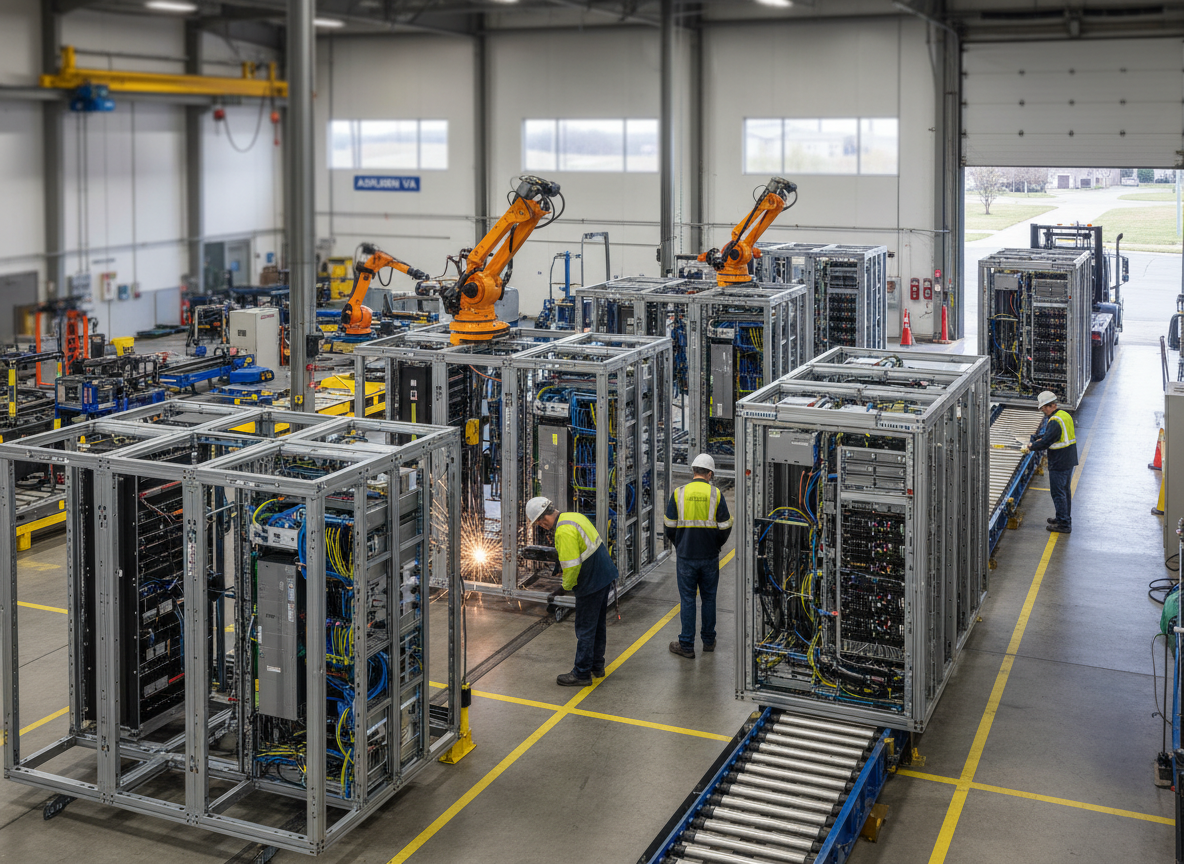
Factory fabrication for modular data center infrastructure fundamentally transforms the traditional construction paradigm by shifting a significant portion of the build process from the unpredictable site environment to a controlled manufacturing facility. This approach enables concurrent civil works and infrastructure module production, drastically reducing overall project timelines by 30-50% compared to conventional stick-built methods. It ensures consistent quality control, as components are assembled and tested under repeatable conditions, mitigating the variables inherent in diverse global construction sites. The process involves pre-engineering, precise material sourcing, assembly line production of modules—ranging from power distribution units to entire data halls—and rigorous factory acceptance testing (FAT) before shipment to the final deployment location. This systematic methodology supports rapid scalability and deployment across varied geographical contexts, from urban centers like London and Singapore to more remote industrial zones.
Understanding the Pre-Fabrication Process
The pre-fabrication process for modular data centers begins long before any physical construction, with extensive design and engineering. This phase involves detailed schematics for all systems, including electrical, mechanical, and structural elements, often leveraging Building Information Modeling (BIM) to identify and resolve potential clashes virtually. Once designs are finalized and approved, the procurement team sources materials and components from a global supply chain, ensuring compliance with specified standards and certifications. This meticulous planning minimizes waste and rework during the actual fabrication. Concurrently, site preparation can proceed, laying foundations and establishing utility connections without waiting for module completion. This parallel workflow is a key driver of accelerated project delivery, enabling a data center in a rapidly expanding market like Dublin or Dallas-Fort Worth to become operational significantly faster.
Module Assembly and Integration
Module assembly takes place on dedicated production lines within the factory. This environment allows for specialized tooling, consistent environmental conditions, and a workforce trained specifically in modular construction techniques. Each module, whether it's a Power Distribution Module or a Cooling and Mechanical Module, is built to precise specifications. Components are installed, wired, piped, and interconnected within the module's structural frame. This includes everything from server racks and power distribution units to HVAC systems and fire suppression. The assembly line approach inherently drives efficiency and repeatability, ensuring that each module produced meets uniform quality standards, regardless of whether it's destined for a hyperscale facility in Northern Virginia or an edge deployment in Silicon Valley.
Quality Control and Factory Acceptance Testing (FAT)
A critical stage in factory fabrication is Quality Control (QC) and Factory Acceptance Testing (FAT). Throughout the assembly process, multiple layers of QC inspections are performed, checking for structural integrity, electrical continuity, plumbing leaks, and adherence to design specifications. Once a module is fully assembled, it undergoes a comprehensive FAT. This involves powering up all systems, simulating operational loads, and verifying that all components function as intended and meet performance benchmarks. For instance, a UPS and battery room module would undergo rigorous testing of its power transfer switches and battery discharge capabilities. This exhaustive testing in a controlled factory setting significantly reduces the risk of commissioning delays and costly issues once the modules arrive at the deployment site, offering greater assurance for projects in demanding environments like Tokyo or Frankfurt.
Logistics and On-Site Deployment
Following successful FAT, the modular units are carefully prepared for transportation. This involves securing all internal components, weatherproofing the exterior, and arranging specialized logistics for oversized loads. Depending on their size and destination, modules may be shipped via road, rail, or sea. Upon arrival at the designated site—whether it's a new build in Singapore or an expansion in Amsterdam—the modules are offloaded and precisely positioned onto pre-prepared foundations. The final stage involves interconnecting the modules to each other and to site utilities, followed by site acceptance testing (SAT) to confirm seamless integration and full operational readiness. This streamlined deployment minimizes on-site construction time, reduces labor requirements, and enhances safety, making it an attractive solution for rapid market entry or expansion.
Advantages of Factory Fabrication
The factory fabrication model offers several distinct advantages for data center developers and operators. Firstly, it provides predictability in project timelines and costs, as the controlled environment mitigates many common construction delays and cost overruns. Secondly, the inherent quality control in a factory setting leads to a more reliable and robust infrastructure, reducing the likelihood of defects. Thirdly, it enables rapid scalability, allowing organizations to quickly deploy capacity in response to market demands, which is crucial for dynamic regions like Sao Paulo or Sydney. Furthermore, factory fabrication can contribute to sustainability goals by optimizing material usage and reducing waste through efficient manufacturing processes. The ability to concurrently execute site work and module construction also significantly compresses the overall project schedule, delivering operational data centers faster.