2026-09-16 ·
Scaling Edge Infrastructure with Modular Buildings
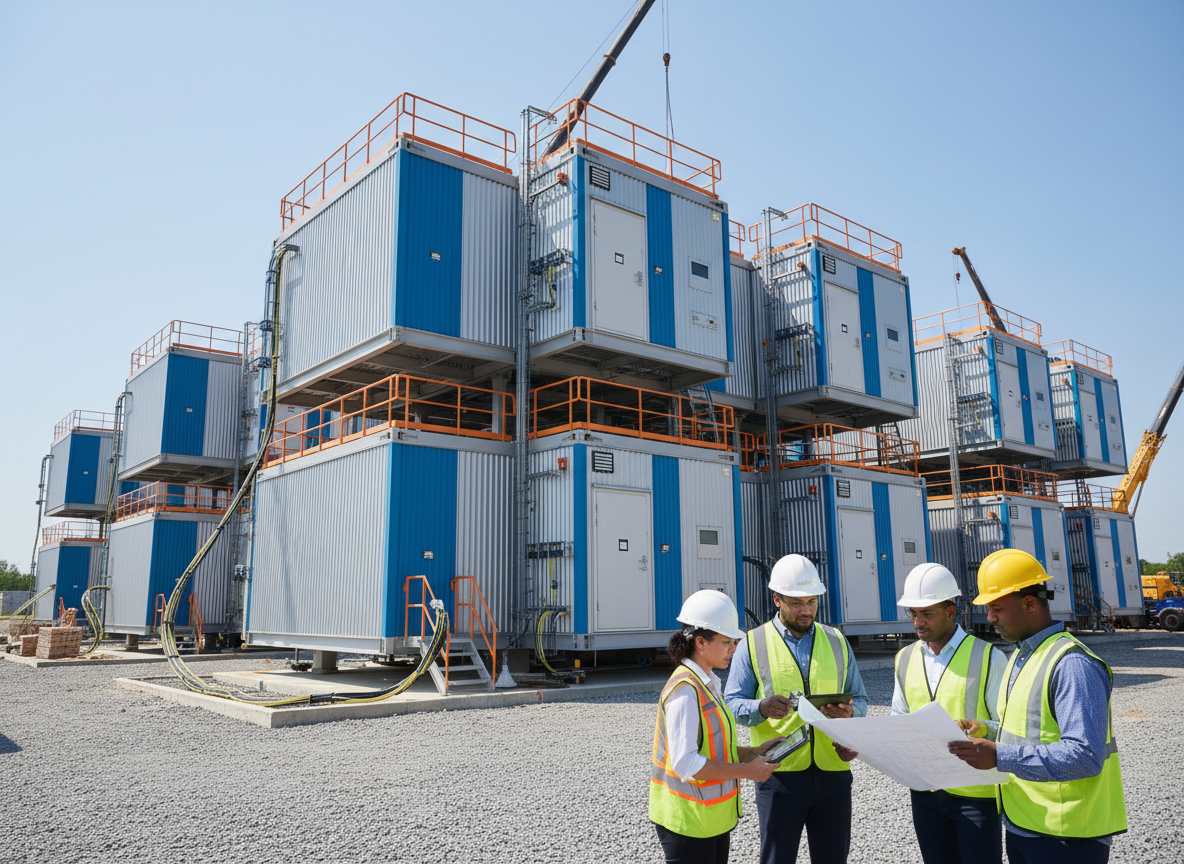
Scaling edge infrastructure with modular buildings is not only feasible but increasingly becoming the preferred strategy for rapid deployment, typically reducing project timelines by 30-50% compared to conventional build methods, and offering significant cost efficiencies through optimized manufacturing processes. This approach directly addresses the critical need for low-latency data processing closer to end-users and IoT devices, enabling organizations to expand their compute capacity precisely where and when it's needed without the extensive lead times and capital expenditure associated with traditional construction. The inherent flexibility of modular designs allows for incremental growth, mitigating the risks of over-provisioning while ensuring that infrastructure can adapt to evolving demands. By leveraging standardized components and off-site fabrication, modular solutions deliver predictable performance and quality, essential for the reliability required at the network edge.
Understanding Edge Infrastructure Demands
Edge infrastructure is characterized by its distributed nature and proximity to data sources, driven by applications such as IoT, AI/ML at the edge, and 5G networks. These applications demand ultra-low latency, high bandwidth, and robust processing capabilities, often in locations lacking existing data center facilities. Traditional data center construction struggles to meet these requirements due to lengthy planning, permitting, and build-out phases, which can span years. Moreover, the capital-intensive nature of conventional builds often necessitates significant upfront investment, making it challenging to justify deployments in nascent or rapidly evolving edge markets. The need for rapid deployment and scalability is paramount, as business requirements can shift quickly, requiring infrastructure to be operational in weeks or months, not years.
The physical deployment environment for edge facilities also presents unique challenges. Many edge locations are remote, have limited space, or are subject to harsh environmental conditions, such as the extreme temperatures seen in parts of the Middle East like Dubai or the humid climates of Southeast Asia in Singapore. Modular buildings are specifically engineered to withstand these diverse conditions, providing a controlled and secure environment for critical IT equipment. Their robust construction and factory-controlled assembly ensure consistent quality and resilience, which are difficult to achieve with traditional, site-built methods in challenging locations. This makes them ideal for deploying compute capacity closer to the point of data generation, whether it's a smart factory, a remote energy facility, or a densely populated urban area.
Advantages of Modular Buildings for Edge Scaling
Modular data center buildings offer several distinct advantages that make them uniquely suited for scaling edge infrastructure. One primary benefit is speed of deployment. Components are fabricated concurrently off-site in a controlled factory environment, reducing the overall project timeline significantly. This parallel construction process minimizes disruption at the deployment site and accelerates time-to-market for new services. For example, a standard modular unit can often be manufactured and delivered within 12–20 weeks, a fraction of the time required for a stick-built facility. This rapid deployment capability is crucial for capitalizing on emerging market opportunities and responding swiftly to competitive pressures.
Another key advantage is scalability and flexibility. Modular units can be deployed incrementally, allowing organizations to start with a smaller footprint and expand capacity as demand grows. This "pay-as-you-grow" model optimizes capital expenditure, preventing over-provisioning and ensuring that resources are allocated efficiently. Whether it's adding a new module for increased compute, expanding power distribution with a dedicated Modular Electrical Building, or integrating additional cooling capacity, the modular approach simplifies phased expansion. This flexibility is vital in dynamic edge environments where future requirements may not be fully known at the outset. Learn more about this approach in our article on Phased Capacity Expansion with Modular Infrastructure.
Design and Technical Considerations
When scaling edge infrastructure with modular buildings, several technical considerations are paramount to ensure optimal performance and longevity. Power density is a critical factor, as edge deployments often require high compute power in a compact footprint. Modular designs can accommodate varying power densities, from 5 kW per rack to over 30 kW per rack, through efficient cooling and power distribution strategies. This includes integrating advanced cooling technologies, such as direct-to-chip liquid cooling or evaporative cooling, which are more effective in high-density environments than traditional air-cooling methods.
Environmental control within modular units is also crucial. Edge locations can experience significant temperature fluctuations and humidity levels, particularly in regions like Phoenix or Riyadh. Modular buildings are designed with robust insulation, precision cooling systems, and humidity control to maintain a stable internal environment, protecting sensitive IT equipment from external conditions. Furthermore, physical security is a fundamental design element, incorporating features like reinforced walls, access control systems, and surveillance to protect against unauthorized access and environmental threats. The ability to customize these elements within a standardized framework ensures that each edge deployment meets specific operational and security requirements.
Deployment Logistics and Site Preparation
While modular buildings are manufactured off-site, successful deployment at the edge requires meticulous planning for logistics and site preparation. Site access planning is a critical first step, as modular units can be large and heavy, necessitating clear routes for transportation and crane placement. This involves assessing road conditions, bridge clearances, and available space at the final deployment site. For instance, navigating tight urban streets in cities like London or Tokyo requires detailed logistical coordination to ensure safe and efficient delivery. Our article on Site Access Planning for Modular Deliveries provides further insights into these crucial aspects.