2026-08-27 ·
Parallel Construction and Data Center Project Sequencing
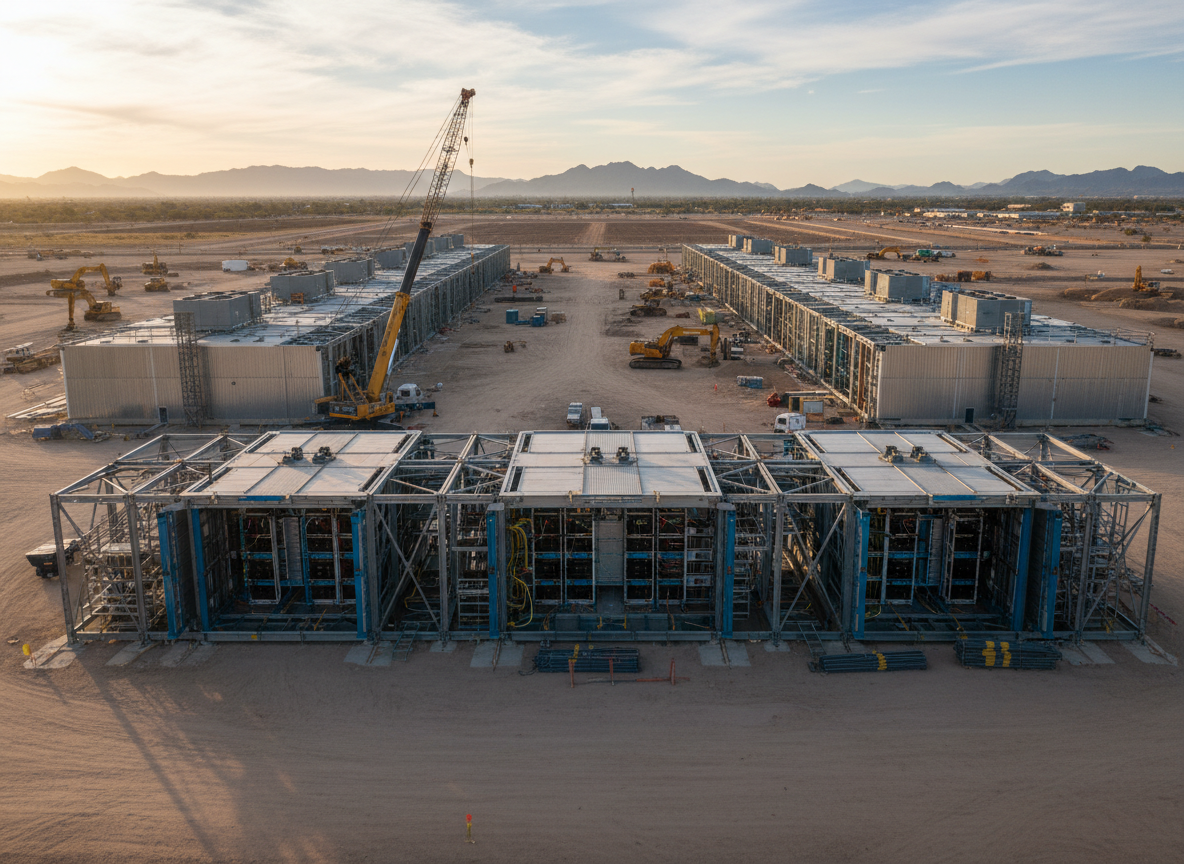
One of the most commonly cited advantages of modular construction is the ability to run factory fabrication and on-site civil work in parallel, rather than sequencing all work after design is finalized. This post looks at how that parallel sequencing works in practice and what it depends on to go smoothly.
How Parallel Sequencing Works
In a modular program, module fabrication can begin once designs are finalized and released to the factory, while the project site is simultaneously being prepared — grading, foundations, utility rough-in — so that by the time modules are ready to ship, the site is ready to receive them. This overlap is what allows modular projects to compress the calendar-time portion of a build compared with a fully sequential approach, though the degree of compression depends on how well the two tracks are coordinated.
What Coordination Requires
Running these tracks in parallel requires accurate, finalized specifications before fabrication starts, since late design changes are harder to accommodate once a module is in production, along with clear milestones so the site team knows what foundation and utility work needs to be ready by module delivery. Projects adding capacity in phases — see phased capacity expansion with modular infrastructure — apply this same logic across multiple delivery stages rather than a single one.
Delivery and Responsibility
Data Center Modular manufactures the modules a project orders and works with the project's own team to align the manufacturing and delivery schedule with site readiness. Site civil work, foundations, utility connections, permitting, and inspections remain the responsibility of the project's local team and contractors — sequencing works only when both tracks are actively managed together.
Related Resources
For more on scaling across multiple sites or phases, see multi-site data center rollout programs and temporary and interim data center infrastructure strategies. See also data center expansion modules for capacity added to existing sites.