2026-09-16 ·
Temporary and Interim Data Center Infrastructure Strategies
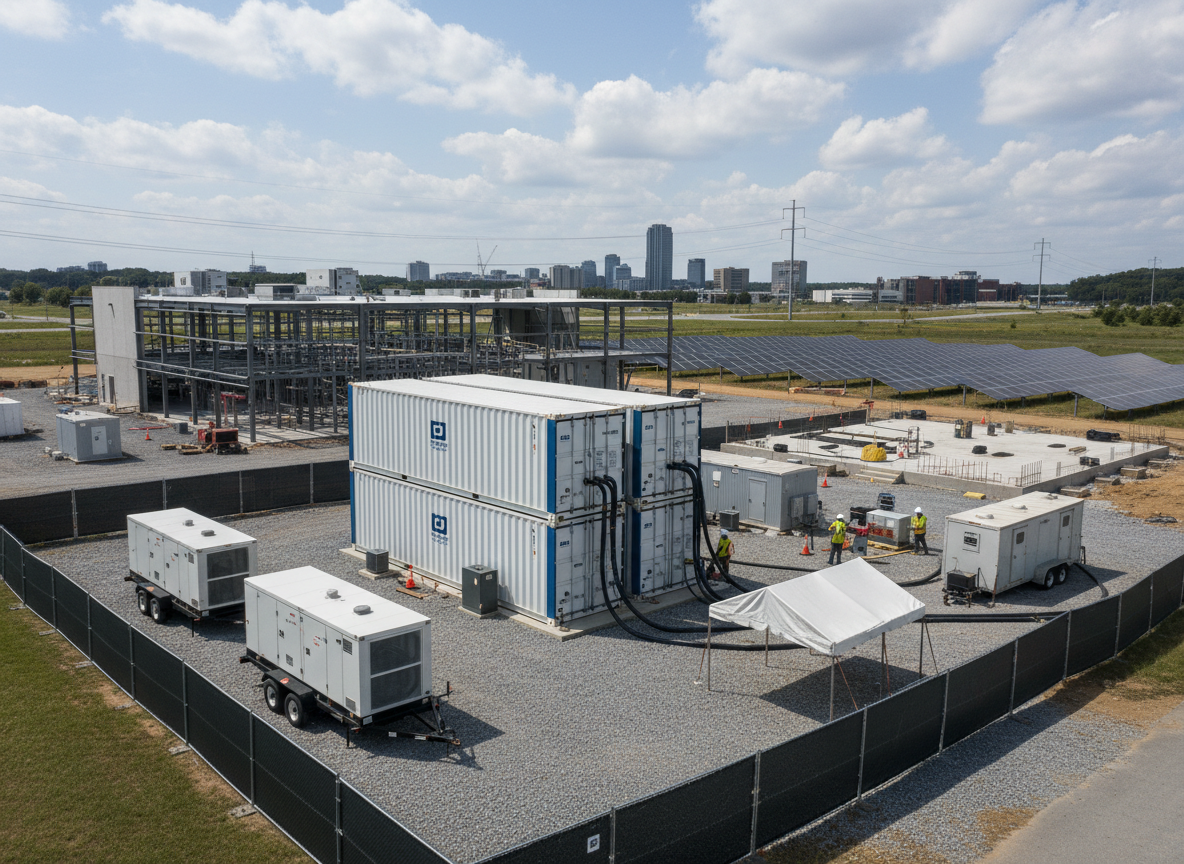
Temporary and interim data center infrastructure strategies are essential for organizations facing rapid deployment needs, disaster recovery scenarios, or requiring a stop-gap solution to bridge capacity until permanent facilities are ready. These approaches leverage modular, prefabricated components to provide functional data center environments with significantly reduced deployment times compared to conventional construction. Depending on the scope and complexity, a fully operational interim solution can be deployed in 4–12 weeks, offering a cost-effective and agile alternative to traditional brick-and-mortar builds. This flexibility allows businesses to maintain critical operations, expand into new markets quickly, or recover from unforeseen outages without committing to long-term capital expenditures prematurely.
Understanding the Need for Temporary Solutions
The demand for temporary data center infrastructure stems from various business drivers, each requiring a rapid, reliable, and scalable response. One primary driver is rapid market expansion, where companies need to establish a presence in new geographic regions, such as the burgeoning digital economies in Southeast Asia or Latin America, without the typical 12–24 month construction cycle for a traditional facility. Another critical use case is disaster recovery (DR), where an existing data center is compromised by natural disaster or other catastrophic event. In such scenarios, an interim facility can be deployed to restore critical IT services within days or weeks, minimizing downtime and financial losses. Furthermore, temporary solutions are vital for capacity bridging, allowing organizations to meet immediate demand while a larger, permanent facility is under construction or awaiting commissioning. This prevents service degradation and ensures continuous operational capability during growth phases.
Key Components of Interim Data Center Infrastructure
Interim data center solutions are built upon a foundation of modular components, each designed for rapid deployment and integration. These often include pre-engineered and factory-assembled modules for power, cooling, and IT space. Power distribution modules are crucial, housing switchgear, transformers, and UPS systems to ensure a stable and redundant power supply. Similarly, cooling and mechanical modules provide the necessary climate control, often utilizing direct expansion (DX) or chilled water systems optimized for efficiency. The IT space itself can be delivered as a modular data hall or integrated within smaller micro data centers, complete with racks, cabling, and fire suppression systems. The advantage of these components lies in their ability to be manufactured off-site, reducing on-site construction time and mitigating risks associated with traditional building processes. This prefabrication approach also ensures consistent quality control and adherence to design specifications.
Deployment Scenarios and Considerations
The successful deployment of temporary and interim data centers requires careful planning and consideration of several factors. For disaster recovery, the solution must be highly mobile and capable of rapid installation at a pre-determined or opportunistic recovery site. This often involves selecting modules that can be transported via standard shipping methods, such as those used for international logistics to locations like Dubai or Singapore. In capacity bridging scenarios, the interim solution might be co-located with an existing facility or placed on an adjacent parcel of land, requiring seamless integration with existing network and power infrastructure. Key considerations include site preparation, utility access, security protocols, and environmental controls. The modular nature of these systems allows for a high degree of customization, but it's essential to define the specific requirements for power density, cooling capacity, and connectivity early in the planning process to ensure the deployed solution meets operational needs. For example, a high-density AI workload in a temporary facility will have vastly different power and cooling demands than a general-purpose server farm.
Advantages of a Modular Approach
Adopting a modular approach for temporary and interim data center infrastructure offers significant advantages over traditional construction. Primarily, it provides speed to deployment, allowing critical infrastructure to be operational in a fraction of the time. This is particularly beneficial in competitive markets where time-to-market is a key differentiator. Secondly, modular solutions offer scalability and flexibility. Unlike fixed structures, modular units can be easily expanded or relocated as business needs evolve, providing a future-proof investment. For instance, a data center expansion module can be added to an existing facility to increase capacity without disrupting ongoing operations. Thirdly, there is cost predictability. Because modules are factory-built, the costs for materials and labor are more stable and less subject to the fluctuations often seen in on-site construction projects. Finally, the controlled factory environment ensures higher quality and reliability, as components are assembled and tested under optimal conditions, reducing the likelihood of defects and improving overall system performance. This consistency is crucial for maintaining uptime in critical IT environments.
Planning for Decommissioning and Transition
A comprehensive strategy for temporary and interim data centers must also include a clear plan for eventual decommissioning or transition to a permanent facility. Since these solutions are not intended for indefinite use, understanding the lifecycle is paramount. The modular design inherently facilitates decommissioning, as units can be disconnected, removed, and potentially redeployed at another location or resold. This reduces waste and maximizes the return on investment. For example, a temporary facility deployed in a remote mining operation in Western Australia might be moved to a different site once the initial project is complete. When transitioning to a new, permanent data center, the interim solution can serve as a seamless bridge, allowing for phased migration of IT loads without service interruption. This requires careful coordination between the temporary infrastructure provider and the permanent facility's integration teams. Considerations such as data migration strategies, network cutovers, and power synchronization must be addressed well in advance to ensure a smooth transition and avoid any operational disruptions. Understanding the international shipping considerations for modular infrastructure is also vital for planning the logistics of movement and redeployment.