2026-09-16 ·
Understanding Module Dimensions and Transport Limits
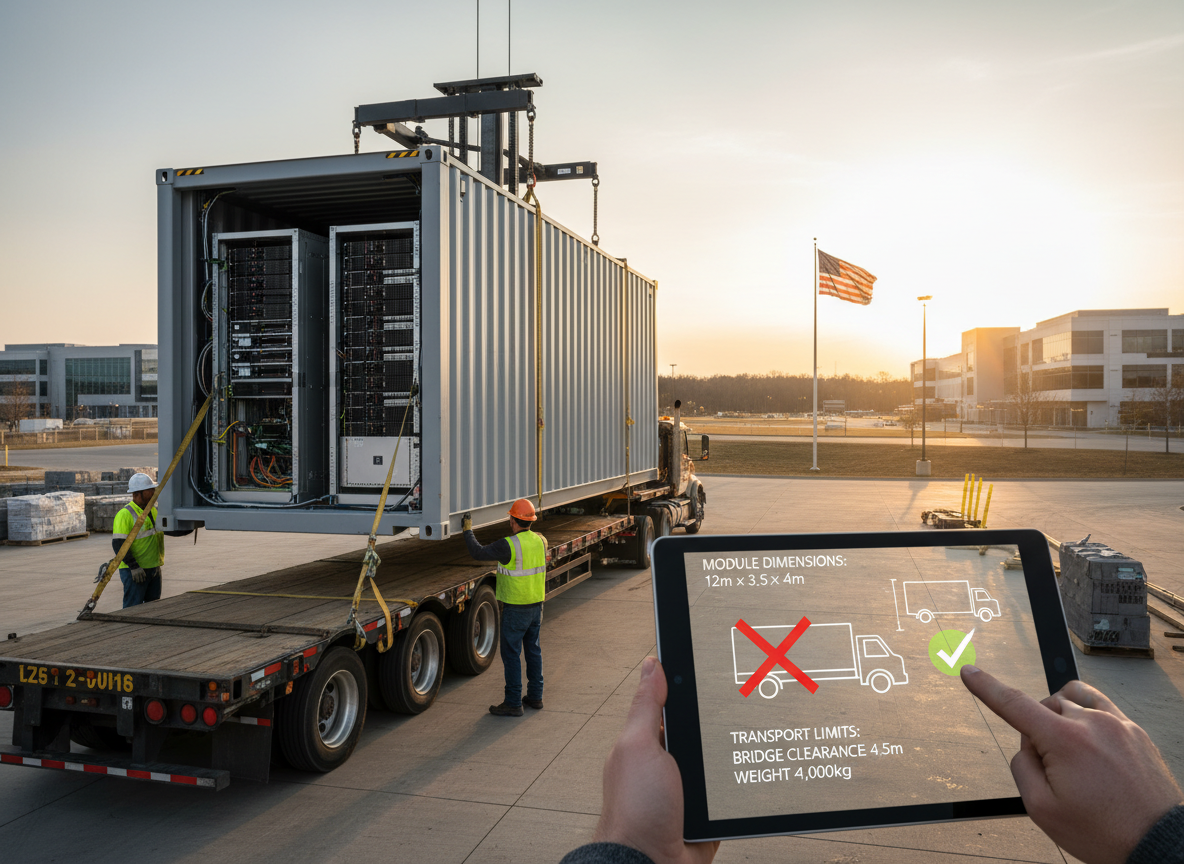
Modular data center dimensions are primarily constrained by the limitations of global transportation networks, typically ranging from 3.5 meters to 5 meters in width, 12 meters to 20 meters in length, and 3.5 meters to 4.5 meters in height for standard road transport without requiring extensive special permits or escorts. These general envelopes are influenced by factors such as bridge clearances, tunnel dimensions, road width restrictions, and vehicle weight limits, which vary significantly by region and country. For instance, a module designed for European roads might face different constraints than one destined for North American highways or the more restrictive routes in certain Asian markets. Exceeding these standard dimensions often necessitates specialized transport equipment, route surveys, temporary infrastructure modifications, and a complex permitting process, all of which add substantial time and cost to a project.
Understanding Road Transport Limitations
Road transport is the most common method for delivering <a href="/services/modular-data-center-buildings">modular data center buildings</a>, but it comes with a distinct set of limitations. Width is often the most critical factor, with many jurisdictions, such as those in the European Union, typically limiting standard loads to 2.55 meters (approximately 8 feet 4 inches). Loads exceeding 3 meters (around 9 feet 10 inches) almost universally require wide load permits, pilot cars, and often nighttime transport to minimize traffic disruption. In North America, standard highway widths are often around 8 feet 6 inches (2.59 meters), with permits for loads up to 12 feet (3.66 meters) being common but still requiring escorts. Anything beyond 16 feet (4.88 meters) in width becomes an oversized load requiring extensive planning, often including temporary removal of street furniture, utility lines, or even bridge inspections. Height restrictions are also significant, dictated by bridge underpasses, power lines, and tunnels, typically ranging from 4.1 meters to 4.9 meters (13 feet 6 inches to 16 feet) without special permits. Length limits for single trailers can vary from 16 meters (53 feet) in many parts of the U.S. to 18.75 meters (61 feet 6 inches) in Europe for articulated vehicles.
Rail Transport Considerations
Rail transport offers an alternative for larger or heavier modules, particularly for long distances where road transport might be impractical or cost-prohibitive. However, rail also has its own set of dimensional constraints, primarily determined by the loading gauge — the maximum cross-section of a vehicle or load that can pass safely along a railway line. These gauges vary significantly across different railway networks globally. For example, the North American loading gauge (AAR Plate F) is generally more generous than many European or Asian gauges, allowing for modules up to approximately 3.25 meters (10 feet 8 inches) wide and 6.1 meters (20 feet) high on standard flatcars. In contrast, many European lines have more restrictive gauges, often limiting width to 3.15 meters (10 feet 4 inches) and height to 4.65 meters (15 feet 3 inches) from the rail head. Specific routes within a country can have even tighter restrictions due to tunnels or bridges. The weight capacity of rail cars is substantial, often exceeding 100 metric tons, making it suitable for very heavy <a href="/services/power-distribution-modules">power distribution modules</a> or fully integrated units. Careful route planning and specialized rail cars are essential for optimizing rail transport.
Sea Freight and Intermodal Challenges
For international projects, sea freight becomes a critical component of the logistics chain. While container ships can carry vast quantities, modular data center components often exceed standard container dimensions, necessitating breakbulk cargo or roll-on/roll-off (Ro-Ro) services. Standard ISO shipping containers are typically 2.44 meters (8 feet) wide, 2.59 meters (8 feet 6 inches) high, and 6.1 meters (20 feet) or 12.2 meters (40 feet) long. Modules exceeding these dimensions require specialized flat rack or open-top containers, or must be shipped as breakbulk, which involves direct loading onto the vessel's deck or in its hold. Breakbulk shipping offers greater flexibility in module size but requires specialized lifting equipment at both origin and destination ports. The maximum dimensions for breakbulk are largely dictated by the vessel's crane capacity, hatch size, and available deck space, which can accommodate widths up to 12 meters (39 feet) and lengths exceeding 50 meters (164 feet) on some heavy-lift vessels. However, the true constraint often lies in the last-mile delivery from the port to the data center site, where road transport limitations re-emerge, as discussed previously. This intermodal transfer point is a common bottleneck, especially when delivering to regions like <a href="/areas/johor">Johor</a> or <a href="/areas/dubai">Dubai</a>, where po
Impact of Module Design on Transport
The initial design of a modular data center has a profound impact on its transportability and overall project cost. Designers must balance the desire for larger, fully integrated modules that reduce on-site work with the practicalities and expenses of oversized transport. For instance, a module designed to be 4 meters wide might require fewer on-site connections but will incur higher transport costs and longer lead times for permits compared to a 3-meter-wide module that might require more on-site assembly. The decision to split a larger data hall into multiple smaller <a href="/services/modular-data-halls">modular data halls</a> is often driven by transport economics. Furthermore, the structural integrity of the module during transit is paramount. Modules must be engineered to withstand dynamic loads, vibrations, and accelerations encountered during road, rail, or sea journeys, which can be significantly different from the static loads they will experience once installed. This often involves designing robust lifting points, internal bracing, and secure attachment mechanisms to prevent damage to critical internal components like IT racks or cooling units. Considerations for securing sensitive equipment are detailed in our article on <a href="/blog/security-requirements-for-modular-infrastructure">Security Requirements for Modular Infrastructure</a>.
Permitting and Logistics Complexity
Navigating the complex landscape of transport permits and logistics is a critical, often underestimated, aspect of modular data center deployment. Each jurisdiction, whether state, province, or country, has its own set of regulations, fees, and lead times for oversized load permits. In some regions, permits can be obtained within days, while in others, particularly for very large or heavy modules, the process can take weeks or even months, requiring detailed route surveys, engineering analyses, and coordination with multiple agencies. For projects in markets like <a href="/areas/sao-paulo">Sao Paulo</a> or <a href="/areas/tokyo">Tokyo</a>, urban congestion and specific municipal bylaws add further layers of complexity. Specialized heavy-haul transport companies are essential partners, possessing the expertise, equipment, and relationships to manage these intricate logistics. They can advise on optimal module dimensions for specific routes, conduct pre-transport surveys to identify potential obstacles, and manage the entire permitting and escort process, ensuring compliance and minimizing delays. This upfront planning is crucial to avoiding costly surprises during the deployment phase.