2026-09-16 ·
Battery Room Design and Safety Considerations
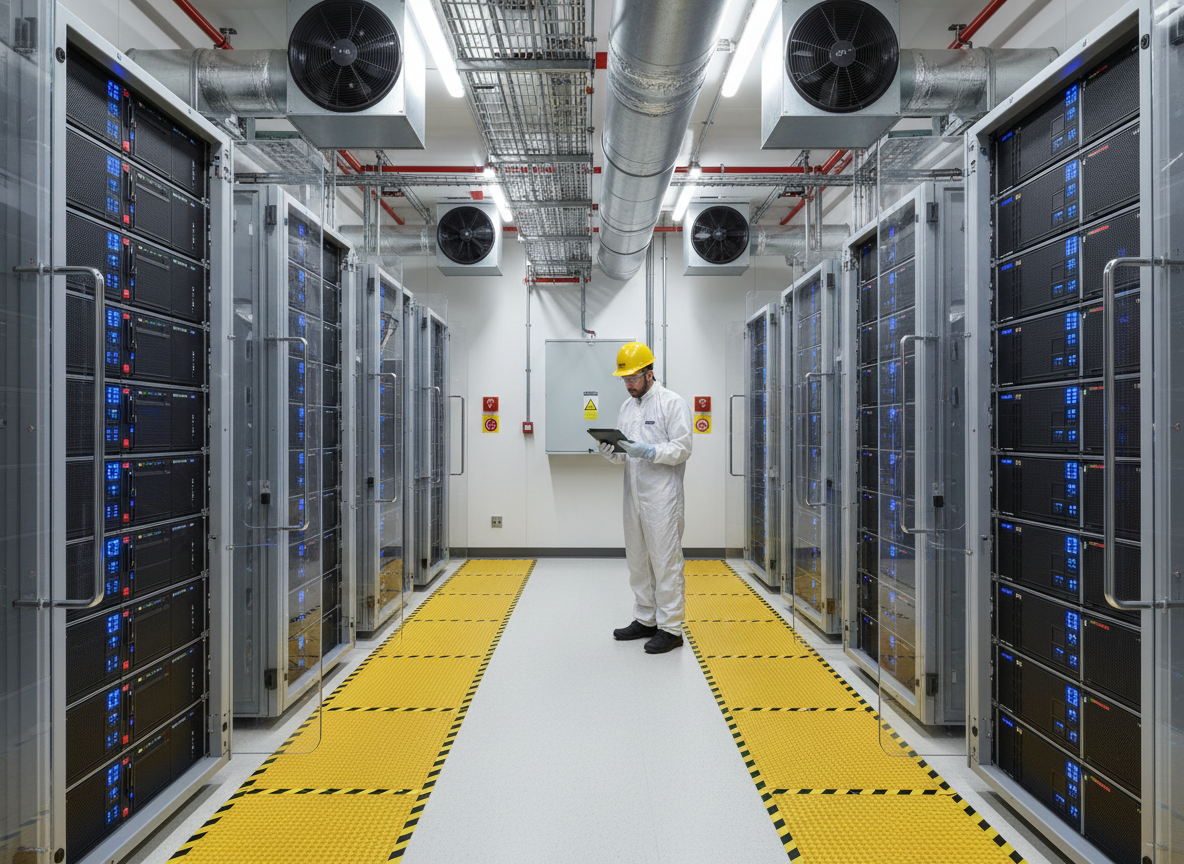
Battery room design for data centers is a critical undertaking that necessitates a comprehensive approach, integrating electrical, mechanical, and structural engineering to ensure both operational reliability and personnel safety. The primary considerations revolve around thermal management, hydrogen gas mitigation, fire suppression, structural load bearing, and regulatory compliance. For instance, a typical 500kW UPS system requiring 10 minutes of runtime can necessitate a battery bank weighing upwards of 15,000 kg, occupying a footprint of 20–30 square meters, and generating significant heat and hydrogen during charging and discharge cycles. This demands robust ventilation systems capable of achieving 20–40 air changes per hour (ACH) to prevent explosive gas concentrations, alongside specialized fire suppression tailored for electrical fires, such as clean agent systems. Ignoring these factors can lead to catastrophic failures, including thermal runaway, explosions, or widespread power outages, underscoring the necessity for precise engineering in these environments.
Ventilation and Thermal Management
Effective ventilation is paramount in any battery room, particularly for lead-acid batteries which can off-gas hydrogen during charging. Hydrogen is highly flammable and explosive at concentrations between 4% and 75% in air. To mitigate this risk, ventilation systems must be designed to continuously dilute hydrogen to safe levels, typically below 1% of the total room volume. This often translates to maintaining a minimum of 1 cubic foot per minute (CFM) of exhaust for every 100 Ah of battery capacity, or achieving 20–40 air changes per hour (ACH), depending on the battery type and charging regime. For example, a data center in a humid climate like Singapore might also require dehumidification to prevent condensation, which can lead to short circuits and corrosion. Proper airflow distribution is also crucial to avoid dead zones where hydrogen can accumulate. Data Center Modular offers specialized solutions for Cooling and Mechanical Modules that can be integrated into these designs, ensuring optimal environmental control within the battery room.
Beyond hydrogen dispersion, thermal management is equally vital. Batteries operate most efficiently within a narrow temperature range, typically 20°C to 25°C (68°F to 77°F). Temperatures outside this range can significantly reduce battery lifespan and performance. For instance, a persistent 10°C increase above optimal can halve a lead-acid battery’s expected life. The heat generated by batteries, especially during discharge or rapid charging, can be substantial. Therefore, dedicated cooling systems, often using precision air conditioning units, are essential to maintain stable temperatures. These systems must be redundant to ensure continuous operation, reflecting the critical nature of the power infrastructure they support. The design must also consider the heat load from associated UPS equipment, which often shares the same space or an adjacent one.
Fire Suppression Systems
Fire safety in battery rooms presents unique challenges due to the presence of electrical equipment, flammable electrolytes, and potential hydrogen accumulation. Water-based sprinkler systems, while effective for many fires, can exacerbate electrical fires and pose severe safety risks to personnel. Therefore, specialized fire suppression systems are typically employed. Clean agent systems, such as FM-200, Novec 1230, or inert gas systems (e.g., nitrogen, argon), are preferred. These agents suppress fires by removing oxygen or absorbing heat without leaving residues that could damage sensitive electronic equipment. For example, in a large data center facility near London, a robust inert gas system might be chosen for its environmental profile and effectiveness in enclosed spaces.
Detection systems are equally critical, comprising smoke detectors, heat detectors, and increasingly, hydrogen gas sensors. These sensors are integrated with the building management system (BMS) to trigger alarms, initiate ventilation, and deploy fire suppression agents automatically. The design must account for the potential for rapid fire spread, necessitating quick detection and suppression response times. The integrity of the room itself, with fire-rated walls and doors, also forms a passive layer of protection, preventing the spread of fire to adjacent critical areas within the data center. Regular testing and maintenance of these systems are non-negotiable to ensure their reliability in an emergency.
Structural and Environmental Considerations
The sheer weight of battery banks demands significant structural integrity for the battery room floor. A typical string of UPS batteries can weigh hundreds or even thousands of kilograms, leading to floor loading requirements that often exceed 1,500 kg per square meter (300 pounds per square foot). This necessitates reinforced concrete slabs or specialized raised flooring systems designed to distribute the load evenly. For instance, in a multi-story data center development in Tokyo, meticulous structural calculations are performed to ensure the building can safely support the immense weight of the power infrastructure. Moreover, the room must be designed to withstand potential seismic activity, especially in regions prone to earthquakes, requiring additional structural bracing and battery racking systems that prevent displacement.
Environmental protection measures are also crucial, particularly for flooded lead-acid batteries that contain liquid electrolyte. This includes spill containment systems, such as acid-resistant floor coatings and containment curbs, to prevent corrosive materials from spreading in the event of a leak or rupture. The room’s construction materials must be non-combustible and resistant to corrosive fumes. Furthermore, proper drainage and waste disposal procedures for spent batteries and electrolytes must be established in compliance with local regulations. Data Center Modular provides robust solutions for UPS and Battery Rooms that address these complex structural and environmental demands, ensuring long-term operational integrity.
Safety Protocols and Regulatory Compliance
Beyond physical infrastructure, stringent safety protocols are essential for personnel working within battery rooms. This includes mandatory personal protective equipment (PPE) such as acid-resistant clothing, gloves, face shields, and eye protection. Emergency eyewash stations and safety showers must be readily accessible within 10 seconds travel time from any point in the room. Clear signage indicating hazards (e.g., "Danger: High Voltage," "Flammable Gas") and emergency procedures is also critical. Regular training for all personnel on battery handling, maintenance, and emergency response is paramount to minimize risks.