2026-09-16 ·
Edge Data Centers vs Micro Data Centers Explained
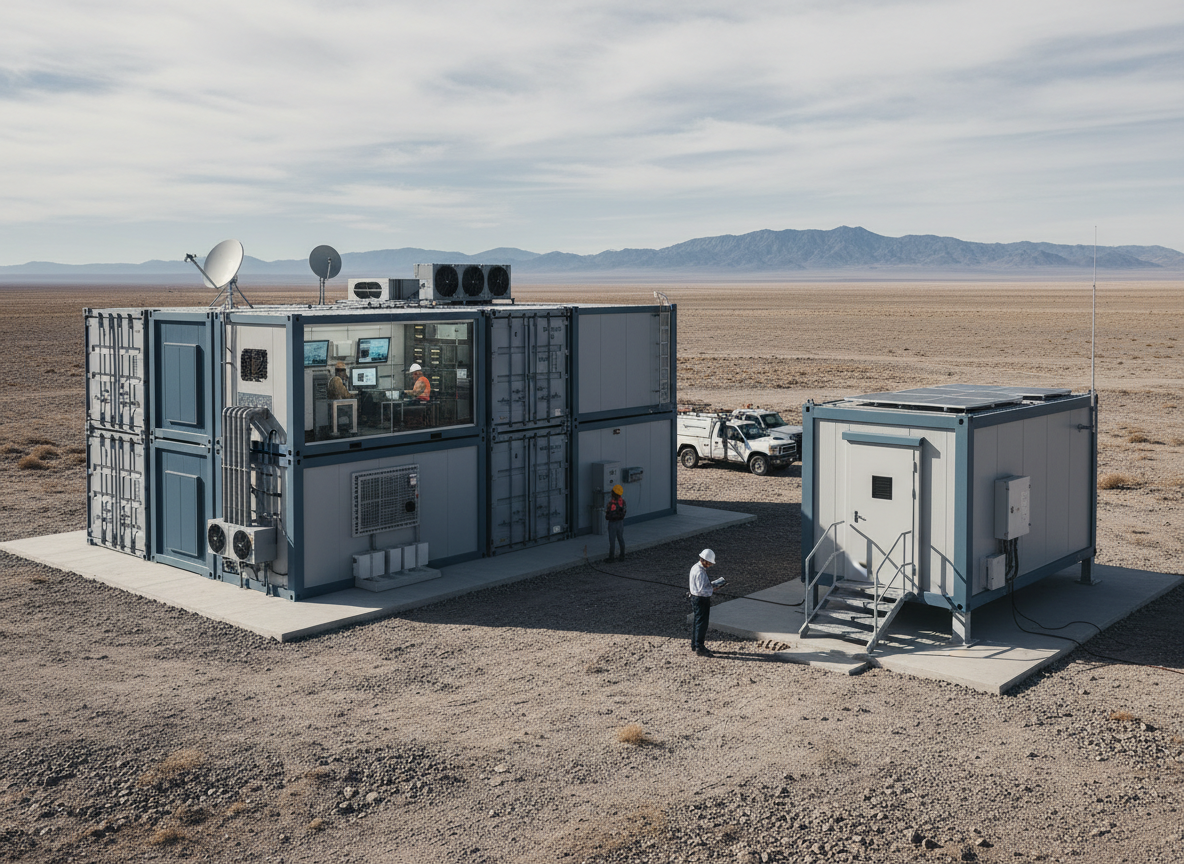
"Edge" and "micro" are often used together, and sometimes interchangeably, to describe smaller data center deployments located closer to end users than a traditional central facility — but the terms describe somewhat different things. This post clarifies the distinction and how each fits into a distributed deployment strategy.
Edge Data Centers
Edge data centers generally describe facilities sized to support a meaningful amount of local compute — enough to serve latency-sensitive applications, content delivery, or regional processing for a defined service area — while remaining smaller and more standardized than a central hyperscale or enterprise facility. See edge data centers for more on this category.
Micro Data Centers
Micro data centers describe an even smaller category — compact, often self-contained units sized for a single application, a small site, or a location where a full edge facility isn't warranted. They prioritize a minimal footprint and rapid deployment over the compute capacity of a larger edge site. See micro data centers for more detail.
Choosing Between Them
Which category fits a given deployment depends on the compute capacity needed at that location, the number of sites in the broader network, and how much local footprint is available — a large distributed network might use a mix of both, with micro data centers at the smallest or most footprint-constrained sites and edge data centers where more local capacity is needed. Equipment enclosures and equipment shelters are also available for the smallest sites in either category.
Related Resources
For more on distributed edge and micro deployments, see modular infrastructure for edge facilities, scaling edge infrastructure with modular buildings, and modular infrastructure for edge computing networks.