2026-09-16 ·
Modular Infrastructure for Edge Facilities
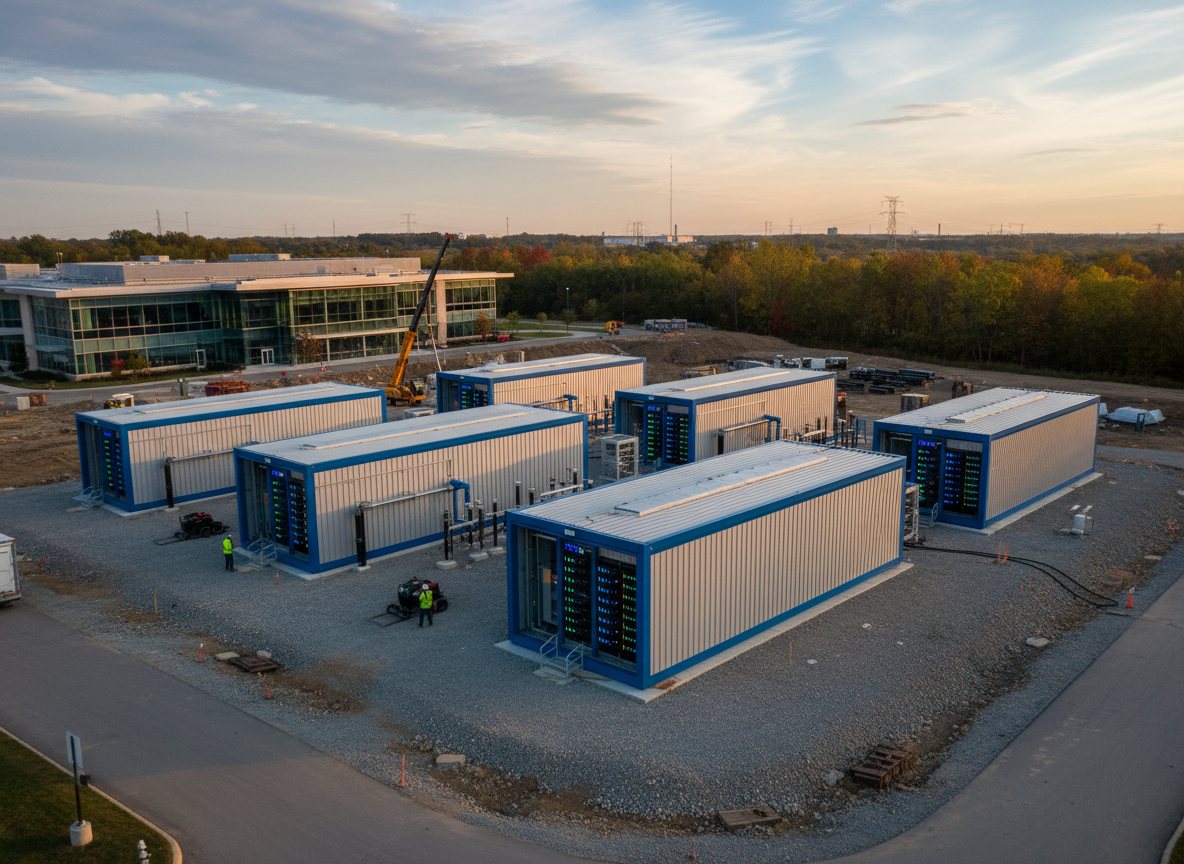
Modular infrastructure is a critical enabler for edge facilities, fundamentally altering how computing resources are deployed and managed at distributed locations. This approach allows for the rapid deployment of pre-engineered, factory-built components, significantly reducing the typical 18–24 month construction cycle of traditional data centers to mere weeks or months for many edge deployments. By leveraging standardized designs and manufacturing processes, modular solutions provide enhanced predictability in project timelines and costs, addressing the urgent demand for localized processing and storage driven by IoT, 5G, and AI applications across diverse global markets, from the bustling urban centers of Tokyo to remote industrial sites in Western Australia.
Understanding Edge Facility Requirements
Edge facilities are characterized by their proximity to data generation or consumption points, often located in environments not traditionally suited for large-scale data centers. These sites demand robust, compact, and often autonomous infrastructure with specific attributes: rapid deployment, energy efficiency, remote management capabilities, and physical security. Unlike hyperscale facilities, edge deployments prioritize low latency, localized data processing, and resilience against intermittent connectivity. Consider a manufacturing plant in Germany requiring real-time analytics for quality control, or a smart city initiative in Singapore needing immediate sensor data processing; these scenarios underscore the need for infrastructure that can be quickly installed and reliably operated outside of primary data center hubs. Modular solutions, particularly those designed as Micro Data Centers or integrated within larger Edge Data Centers, are engineered to meet these precise operational demands.
The Modular Advantage for Edge Deployments
The inherent advantages of modular construction align perfectly with the challenges of edge deployments. Factory fabrication allows for stringent quality control, consistent build standards, and parallelization of site preparation and module construction, drastically compressing project schedules. This reduces the exposure to weather delays, labor shortages, and material inconsistencies often encountered in traditional construction. Furthermore, modular units can be designed for specific environmental conditions, from extreme heat in Dubai to cold climates in Helsinki, ensuring optimal performance regardless of the deployment location. This adaptability extends to power and cooling, with modules often integrating highly efficient, localized systems that minimize operational footprint and energy consumption.
Key Modular Components for Edge
A comprehensive modular edge facility often comprises several integrated components, each serving a critical function. Power distribution is frequently handled by Power Distribution Modules or dedicated Modular Electrical Buildings that house switchgear, transformers, and UPS systems, ensuring reliable and conditioned power. Cooling infrastructure, vital for maintaining optimal operating temperatures in often compact spaces, is typically managed by Cooling and Mechanical Modules that can include direct expansion, chilled water, or adiabatic cooling systems tailored to the local climate and IT load. The IT equipment itself resides within specialized Integrated Modular Data Centers or smaller enclosures, designed for efficient airflow and security. The integration of these elements into pre-configured, tested units minimizes onsite assembly and commissioning time.
Scalability and Flexibility
One of the most compelling aspects of modular infrastructure for edge is its inherent scalability. As data processing needs evolve, additional modules can be deployed to expand capacity without disrupting existing operations. This 'pay-as-you-grow' model is particularly beneficial for edge environments where initial demand might be uncertain or subject to rapid change. For instance, a telecommunications provider expanding 5G coverage across rural Canada might initially deploy a small number of IT modules, then add Data Center Expansion Modules as subscriber density increases. This flexibility also extends to redeployment; modular units can be relocated to new sites if business needs shift, preserving the initial investment and extending asset lifespan, an advantage not possible with fixed, stick-built structures. For more on the strategic benefits, consider "When Modularization Makes Sense for Data Center Projects".
Operational Considerations and Remote Management
Operating edge facilities often means managing them remotely, with limited onsite personnel. Modular designs inherently support this by integrating advanced monitoring and control systems at the factory level. These systems provide real-time data on power consumption, temperature, humidity, and security status, enabling proactive maintenance and rapid response to issues. The standardization of modular components simplifies spare parts management and maintenance procedures across a distributed network of edge sites. Furthermore, physical security, a paramount concern for unmanned or sparsely staffed locations, is often built into the module's design, including robust enclosures, access control, and surveillance integration. This holistic approach to operational management ensures high availability and reduces the total cost of ownership for edge deployments.