2026-09-16 ·
Modular Cooling Infrastructure Options
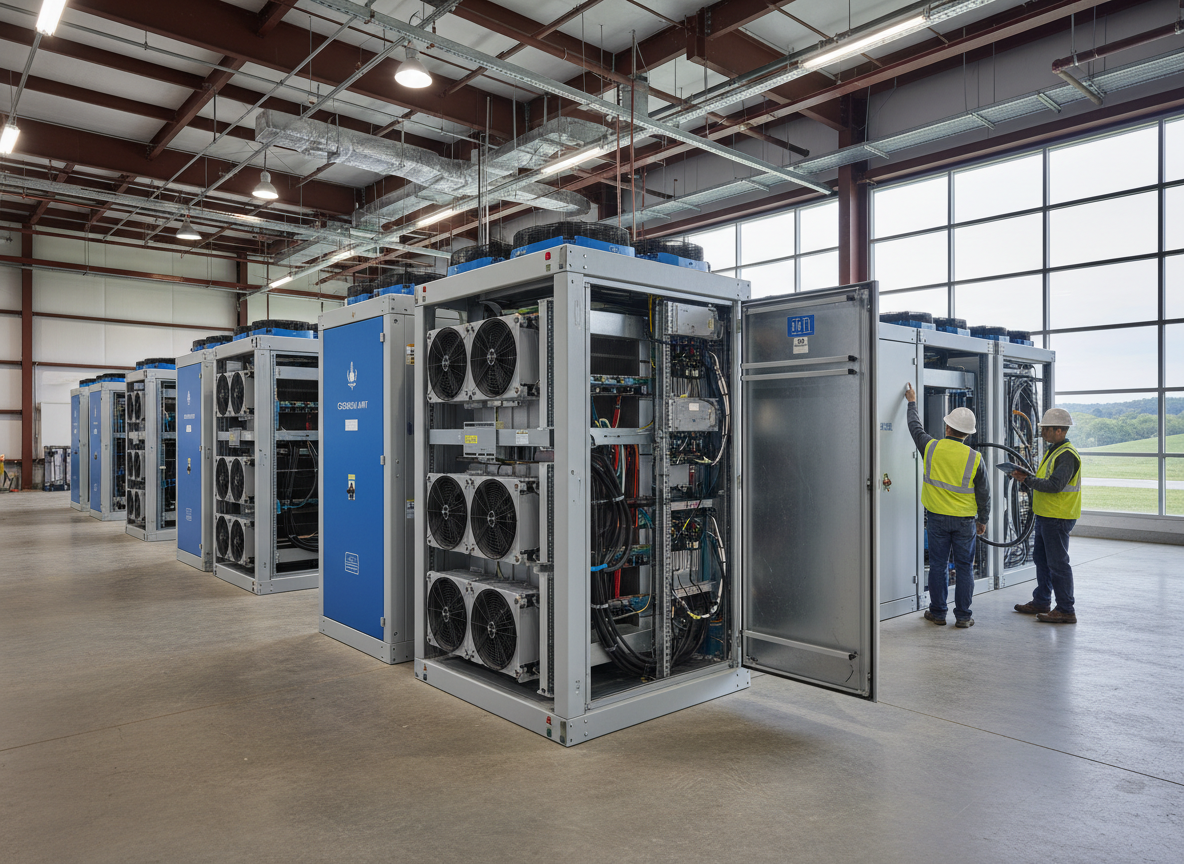
Modular cooling infrastructure options for data centers primarily fall into three categories: air-side economization, water-side economization, and hybrid systems, each offering distinct advantages in specific operational environments and climates. The choice among these depends heavily on factors such as ambient conditions, power density requirements, and the desired level of redundancy and efficiency. Air-side economization leverages external cool air directly or indirectly, while water-side systems utilize chilled water or other liquid coolants. Hybrid approaches combine elements of both, often integrating free cooling with mechanical refrigeration to maximize energy efficiency. Understanding the nuances of each system is critical for data center developers, EPC/GC firms, and procurement teams aiming to optimize thermal management strategies.
Air-Side Economization Modules
Air-side economization modules integrate outdoor air into the data center cooling process, significantly reducing reliance on mechanical refrigeration when ambient temperatures are favorable. These systems can be categorized into direct and indirect approaches. Direct air-side economization introduces filtered outdoor air directly into the data center, expelling hot return air. This method is highly efficient in regions with consistently cool, dry climates, such as parts of Scandinavia or the Canadian prairies, but requires rigorous air filtration to prevent contamination. Indirect air-side economization, conversely, uses a heat exchanger (e.g., plate-and-frame or coil-based) to transfer heat from the data center's return air to the cooler outdoor air without mixing the two air streams. This mitigates concerns about particulate matter, humidity, and gaseous contaminants entering the IT space, making it suitable for a broader range of climates, including those with moderate humidity.
These modular units are often deployed as standalone structures or integrated into larger modular data center buildings. Their effectiveness is directly tied to the local climate profile, with significant energy savings achievable during cooler months. For instance, in a location like Toronto, where winter temperatures frequently drop below freezing, direct or indirect air-side economization can provide substantial free cooling for many months of the year. The design of these modules typically incorporates sophisticated control systems to manage airflow, temperature, and humidity, ensuring stable environmental conditions within the data hall even as outdoor conditions fluctuate.
Water-Side Economization Modules
Water-side economization modules utilize a liquid medium, typically chilled water, to remove heat from the data center. These systems often involve a chiller plant that cools water, which is then circulated through computer room air handlers (CRAHs) or computer room air conditioners (CRACs) within the data hall. Economization in these systems occurs when the outdoor ambient temperature is low enough to cool the circulating water directly through a dry cooler or cooling tower, bypassing the mechanical chiller. This 'free cooling' mode can dramatically reduce energy consumption. For example, in a climate like Dublin, where average annual temperatures are relatively mild, water-side economization can be highly effective, providing extended periods of free cooling.
These modules are particularly well-suited for high-density deployments where air-side cooling alone may struggle to dissipate the concentrated heat loads. The compact nature of liquid cooling allows for more efficient heat transfer and can support higher power densities per rack. Modular chiller plants and associated pump and equipment rooms are often pre-fabricated and delivered as integrated units, reducing onsite construction time and complexity. These solutions are frequently employed in large-scale data center campuses or for specific high-performance computing clusters where thermal management is paramount. The integration of these components into purpose-built cooling and mechanical modules streamlines deployment.
Hybrid Cooling Systems
Hybrid cooling systems combine elements of both air-side and water-side approaches, offering a versatile solution that adapts to varying environmental conditions and thermal loads. A common hybrid configuration involves a primary water-side cooling system, augmented by air-side economization capabilities. For instance, a data center might primarily use chilled water, but during cooler periods, switch to a direct or indirect air-side economizer to reduce the load on the chillers. This allows for optimal energy efficiency across a wider range of climates, from the hot and humid conditions of Singapore to the more temperate environment of London.
These systems are designed for maximum flexibility and resilience, often incorporating sophisticated controls that dynamically select the most energy-efficient cooling mode based on real-time indoor and outdoor conditions. They can integrate components like adiabatic cooling, which uses water evaporation to pre-cool incoming air, enhancing the effectiveness of air-side economization in warmer climates. The modularity of these hybrid solutions means that components such as chiller modules, air handling units, and control systems can be pre-engineered and assembled off-site, leading to faster deployment and consistent quality. This approach is particularly beneficial for projects requiring rapid scaling or phased expansion, as discussed in our article on scaling edge infrastructure with modular buildings.
Considerations for Modular Cooling Deployment
When deploying modular cooling infrastructure, several critical factors must be evaluated. First, climate analysis is paramount; understanding local temperature, humidity, and air quality profiles will dictate the most effective and efficient cooling strategy. For example, a data center in Dubai will require a different approach than one in Helsinki. Second, power density requirements within the data hall directly influence the choice between air-based and liquid-based heat removal. High-density racks often necessitate liquid cooling solutions to manage localized hotspots effectively. Third, scalability and flexibility are key advantages of modular systems. The ability to add cooling capacity as IT load grows, rather than over-provisioning from day one, optimizes capital expenditure and operational efficiency.