2026-09-16 ·
Site Access Planning for Modular Deliveries
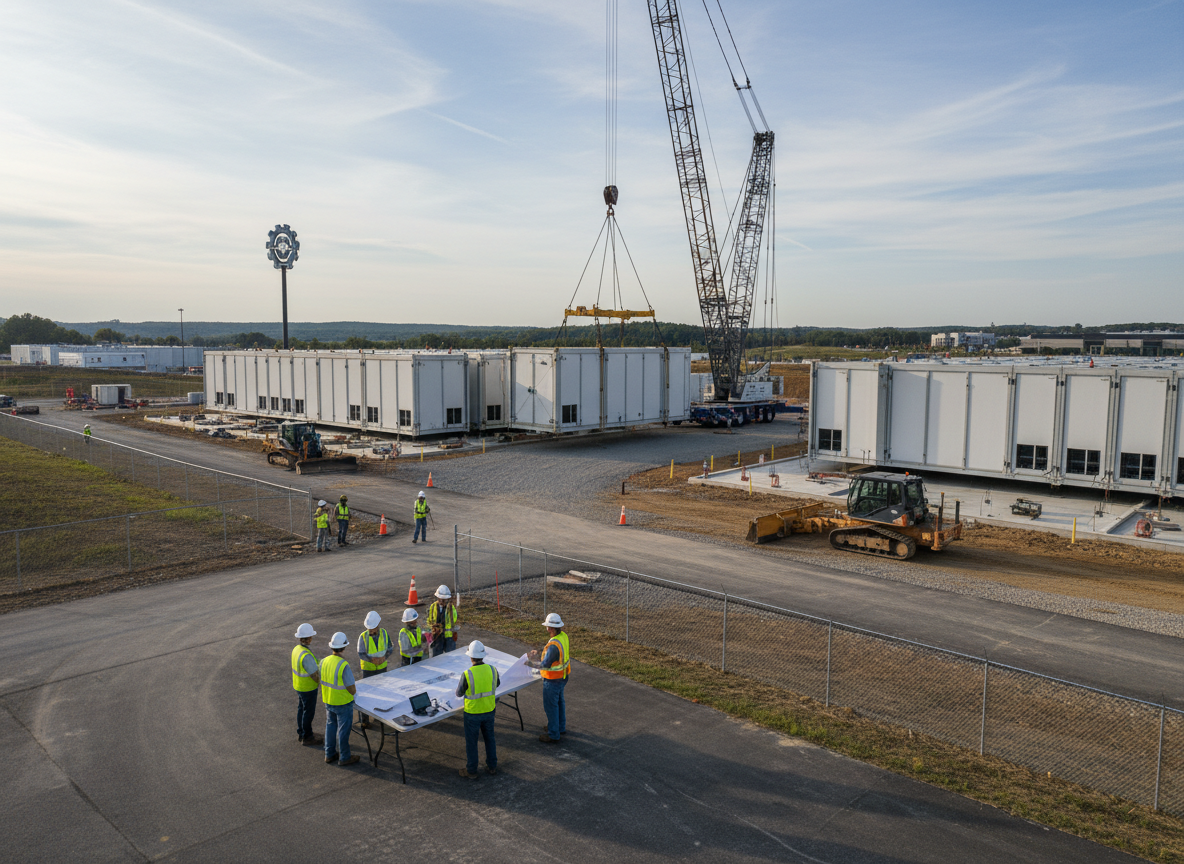
Effective site access planning is paramount for the successful delivery and placement of modular data center infrastructure. This involves a meticulous assessment of the entire transport route and the final installation site, typically requiring a minimum of 6–12 weeks of dedicated planning prior to the initial transport, though complex international or remote sites can extend this to 6 months or more. Key considerations include vertical and horizontal clearances for oversized loads, ground bearing capacities along the route and at the site, local permitting requirements, and the coordination of specialized equipment like heavy-lift cranes. Overlooking any of these factors can lead to significant delays, increased costs, or even the inability to deliver the modules, underscoring the critical need for detailed, proactive planning.
Route Survey and Obstacle Identification
A comprehensive route survey is the foundational step in site access planning for modular deliveries. This involves physically traversing the proposed transport route from the manufacturing facility or port of entry to the data center site. The survey must identify all potential vertical and horizontal obstructions. Vertical obstructions include bridges, overhead power lines, traffic signals, railway crossings, and communication cables. Each of these must be measured precisely, accounting for the full height of the modular unit on its transport vehicle, which can often exceed 5 meters. Horizontal obstructions include narrow road sections, sharp turns, encroaching vegetation, and the presence of street furniture like lampposts or signage that may need temporary removal. In urban environments such as central London or Tokyo, these challenges are often magnified, requiring detailed street-level analysis and potential nighttime transport windows.
The route survey also needs to assess the structural integrity of the roads and bridges along the path. Many modular data center units, particularly large Modular Data Halls or Modular Electrical Buildings, can weigh tens of thousands of kilograms, far exceeding standard road weight limits. This necessitates bridge load capacity assessments and, in some cases, the use of specialized multi-axle trailers designed to distribute weight more evenly. Detailed topographical analysis is also crucial to identify steep grades or sharp inclines that could challenge heavy transport vehicles. Any identified obstacles must be documented with photographic evidence, precise measurements, and potential mitigation strategies, such as temporary road closures, utility line lifts, or detours.
Site Preparation and Ground Bearing Capacity
Once the transport route is clear, attention shifts to the immediate data center site. The ground bearing capacity of the delivery path within the site and the final placement area is critical. Modular units, especially when lifted by cranes, exert immense pressure on the ground. A detailed geotechnical survey is often required to confirm that the subgrade can support the weight of the module, the crane, and any associated heavy equipment. If the ground conditions are insufficient, soil stabilization, the use of heavy-duty matting, or even temporary concrete pads may be necessary. This is particularly relevant for sites developed on reclaimed land or areas with high water tables, such as coastal regions in Singapore or parts of the Netherlands.
Beyond ground bearing, the site must be cleared and graded to provide a stable, level surface for module offloading and placement. This includes ensuring adequate space for crane setup, outrigger deployment, and the maneuvering of the module into its final position. Considerations for drainage and potential erosion during the delivery window are also important. Any existing infrastructure, such as underground utilities or shallow foundations, must be accurately mapped and protected to prevent damage during heavy equipment operations. Understanding these site-specific challenges early helps in developing a robust site logistics plan, preventing costly delays and rework during the critical delivery phase.
Permitting, Escorts, and Regulatory Compliance
Securing the necessary permits and ensuring regulatory compliance is a complex and time-consuming aspect of site access planning. Transporting oversized and overweight loads requires special permits from multiple jurisdictions, including municipal, provincial/state, and national authorities. The application process for these permits can be extensive, often requiring detailed route plans, engineering drawings, and traffic management schemes. Lead times for permit approval can vary significantly, from a few weeks in some regions to several months in others, such as for complex movements through historical districts in European cities like Rome or Paris.
In addition to permits, many jurisdictions mandate police or private escorts for oversized loads to ensure public safety and manage traffic flow. The number of escorts, their required qualifications, and the specific routes they must follow are typically dictated by local regulations. Coordinating these escorts with the transport schedule and local law enforcement agencies is a critical logistical task. Furthermore, environmental regulations, noise ordinances, and specific working hour restrictions, particularly in densely populated areas, must be adhered to. Failure to comply with any of these regulations can result in fines, project shutdowns, or even the impoundment of equipment, highlighting the importance of thorough due diligence in this area. For more insights into broader logistical challenges, consider reviewing our article on International Shipping Considerations for Modular Infrastructure.
Specialized Equipment and Logistics Coordination
The successful delivery and placement of modular data center components often rely on specialized heavy-lift equipment, primarily cranes. Selecting the appropriate crane type and capacity is paramount, based on the weight and dimensions of the heaviest module, the reach required, and the available space for crane setup. This often involves detailed lift plans developed by certified rigging engineers. Factors like wind speed, ground conditions, and proximity to existing structures must all be incorporated into the lift plan to ensure safety and efficiency. In constrained sites, such as those for Edge Data Centers in urban areas, multiple smaller cranes or specialized gantry systems might be required instead of a single large crane.