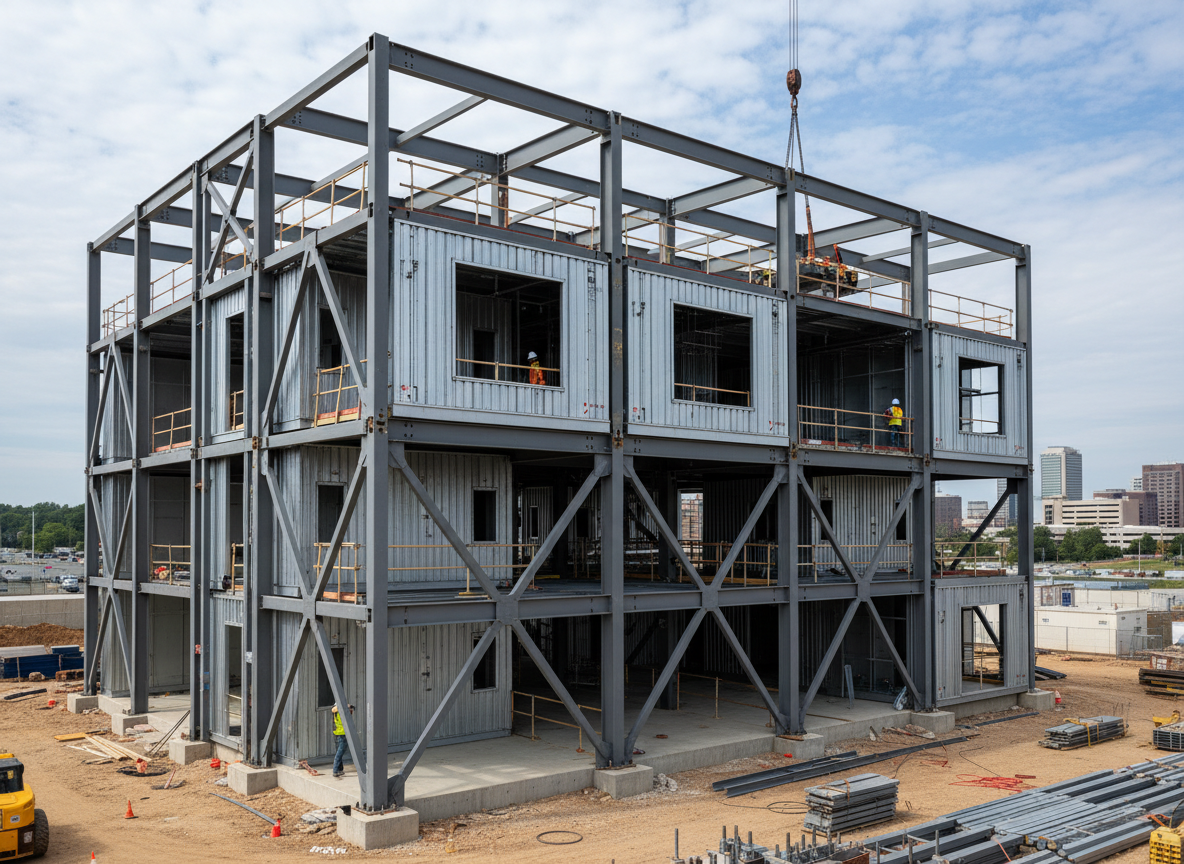
Australia's data center market is concentrated primarily around Sydney, with Melbourne established as a significant secondary hub, within a national context shaped by the country's geographic isolation and its ongoing transition toward renewable power generation. This page provides a national view of the Australian modular infrastructure market; for market-specific detail, see our Sydney page and Melbourne page.
National Market Context and Development Regions
Sydney remains Australia's primary hyperscale and colocation hub, supported by strong domestic and international connectivity. Melbourne has grown as an important secondary market, and other Australian cities are seeing increasing interest as grid capacity and land availability near Sydney tighten. Australia's geographic distance from other major global markets also makes it a distinct consideration for edge deployments serving the domestic population.
Power and Electrical Infrastructure
Australia's electricity grid is undergoing a significant transition toward renewable generation, and grid capacity varies considerably by state and region. Modular electrical buildings, switchgear buildings, and power distribution modules can be configured to the utility interface and redundancy architecture specified for a given project.
Cooling and High-Density Compute
Australia's climate varies substantially across its major markets, from Melbourne's more temperate conditions to Sydney's warmer, more humid climate and considerably hotter conditions further inland and to the north. Cooling and mechanical modules and liquid cooling infrastructure modules can be configured to the specific climate and density requirements a project specifies.
AI/HPC, Hyperscale, Colocation, and Edge Demand
Demand in Australia spans hyperscale and colocation capacity in Sydney and Melbourne, enterprise and cloud deployments, and growing interest in AI/HPC infrastructure and edge nodes supporting Australia's geographically dispersed population. AI and HPC modular infrastructure and edge data centers can be configured to these varied requirements.
Modular Deployment at National Program Scale
For operators expanding across multiple Australian states, modular delivery supports standardized specifications with regional adaptation for local climate, grid, and regulatory conditions. See multi-building data center infrastructure.
Logistics and International Delivery
Given Australia's geographic distance from major manufacturing regions, international shipping and transport planning are especially important considerations for modular projects in the country. See international shipping considerations for modular infrastructure and managing oversized module logistics.
Data Center Modular manufactures modular infrastructure to the specifications of buyers and project teams throughout Australia. Local permitting, grid connection, site preparation, foundations, and installation remain the responsibility of the project's local team. For market-specific detail, see our Sydney page and Melbourne page.
Modular Data Center in Australia — Local Notes
- •Australia's electricity grid is undergoing a significant renewable transition, and available capacity varies considerably by state.
- •Australia's geographic distance from major manufacturing regions makes international shipping and transport planning an especially important part of project scheduling.
- •Climate varies substantially across Australian markets, from Melbourne's temperate conditions to considerably hotter conditions in northern and inland regions.