2026-09-16 ·
Modular Solutions for Colocation Expansion Projects
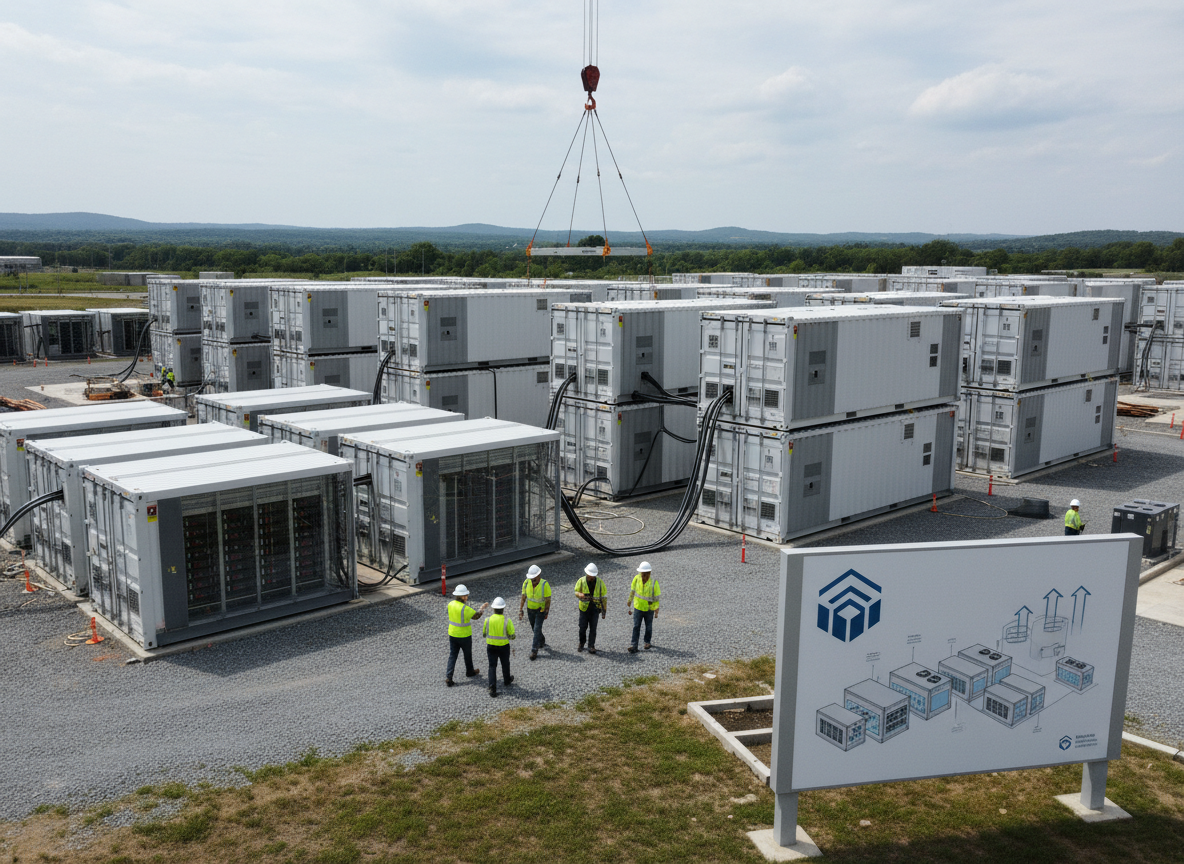
Modular solutions significantly accelerate colocation data center expansion projects, often reducing deployment times by 30-50% compared to traditional stick-built construction. This approach allows colocation providers to rapidly respond to market demands, minimize disruption to existing operations, and achieve greater cost predictability. By leveraging pre-engineered and factory-fabricated components, colocation facilities can implement new capacity phases with reduced on-site labor, improved quality control, and a streamlined commissioning process. This speed is critical in competitive markets like Singapore or Frankfurt, where rapid provisioning of space and power is a key differentiator for attracting enterprise clients.
Strategic Advantages of Modular Colocation Expansion
The inherent flexibility and speed of modular construction offer several strategic advantages for colocation providers. Firstly, it enables phased deployment, allowing for an initial, smaller investment to meet immediate demand while retaining the ability to scale incrementally. This minimizes upfront capital expenditure and aligns infrastructure growth more closely with actual customer uptake, reducing stranded capacity. Secondly, modular units, such as data center expansion modules, can be manufactured concurrently with site preparation, drastically cutting overall project schedules. This parallel processing is invaluable when addressing urgent client requirements or capitalizing on market opportunities in rapidly expanding regions like Dubai or Sao Paulo, where land and construction timelines can be challenging.
Furthermore, the controlled factory environment for modular fabrication leads to higher quality control and reduced risk of weather-related delays or on-site construction errors. This translates to more reliable infrastructure and a smoother handover to operations. The ability to standardize designs across multiple sites or expansion phases also simplifies maintenance, spare parts management, and staff training, contributing to long-term operational efficiency. These benefits extend to critical support infrastructure, including modular electrical buildings and cooling systems, ensuring a cohesive and high-performance expansion.
Key Modular Components for Colocation Facilities
Colocation expansion projects often involve a combination of modular components to address various infrastructure needs. Modular data halls are a primary component, providing ready-to-deploy white space complete with racks, power distribution, and cooling interfaces. These can be configured for various power densities, from typical enterprise loads to high-density deployments supporting AI/HPC. Beyond the data hall itself, support modules are crucial. Cooling and mechanical modules house chillers, pumps, and heat rejection equipment, ensuring optimal thermal management for the IT load. For high-density environments, understanding specific cooling requirements is paramount, as discussed in detail in our article on Cooling Requirements for High-Density AI/HPC Deployments.
Electrical infrastructure is another critical area benefiting from modularity. Power distribution modules integrate switchgear, transformers, and UPS systems into pre-fabricated enclosures, simplifying on-site electrical integration and reducing commissioning time. Similarly, UPS and battery rooms can be delivered as self-contained units, ensuring uninterrupted power supply. These modular elements are designed for seamless integration with existing facility infrastructure, minimizing disruption during expansion phases. The precision of factory assembly ensures consistent performance and adherence to specifications, which is vital for maintaining uptime in a colocation environment.
Design Considerations and Integration Challenges
While modular solutions offer significant advantages, successful integration into existing colocation facilities requires careful planning. Site logistics are a primary consideration, including access for transportation and crane lifts of large modules, as well as staging areas. Utility connections—power, fiber, water, and drainage—must be meticulously planned to ensure seamless hook-up. Interface compatibility between new modular components and existing building management systems (BMS), security systems, and fire suppression systems is also crucial. This necessitates close collaboration between the modular provider and the colocation operator's engineering and operations teams.
Another key design consideration is the future-proofing of the expansion. Modular designs should allow for further incremental growth, not just the immediate phase. This includes planning for additional utility capacity, network connectivity, and physical space for subsequent modules. For instance, a colocation provider expanding in a market like Tokyo or London, where real estate is at a premium, would benefit from a modular design that maximizes vertical space or allows for easy re-configuration. The flexibility of modularity should extend to anticipating evolving IT demands, such as higher power densities per rack or new cooling methodologies, enabling efficient upgrades without major structural overhauls.
Project Execution and Timelines
The project execution timeline for a modular colocation expansion typically involves parallel workflows. While site preparation (foundations, utility extensions) is underway, the modular components are being fabricated off-site in a controlled factory environment. This concurrent process is a major driver of the accelerated schedules. Once modules are delivered to the site, installation primarily involves craning the units into place, securing them, and making final utility and data connections. The commissioning phase is also significantly streamlined as many systems are pre-tested at the factory.